The ordinary understanding among agronomists/soil scientists and plant physiologists for many years is that nitrate (NO3-) and ammonium (NH4+) in the soil solution are the primary sources of plant-available nitrogen (N). In recent years with the increasing interest and prevalence of organic crop production systems, there has been an increasing interest in the possible uptake of organic sources of N, particularly amino acids.
In agricultural communities we sometimes encounter people who claim that organic N fertilizer sources are directly available for plant uptake. This implies that the mineralization process from organic forms to the NO3- and NH4+ forms in the soil is not necessary for the provision of plant available forms.
In response to these claims and corresponding questions, a recent review of the literature confirms that across most terrestrial ecosystems, inorganic N forms, specifically nitrate and ammonium (NO3- and NH4+) remain the dominant source of N taken up by plants (Figure 1).

Figure 1. The nitrogen cycle. Source: Stevenson, 1982.
Some recent research evidence demonstrates that some plants do have the ability to take up organic N compounds (e.g., amino acids). Early tracer investigations demonstrated that some plants could take up amino acids directly from soil (Kielland 1994; Näsholm et al. 1998).
Studies on this topic have shown that amino-N assimilation is particularly taking place in very cold environments and situations such as boreal forests, arctic tundra, alpine heathlands, and ericaceous (heath vegetation) shrublands. These are ecosystems where N mineralization is slow and the organic N pools are large (Schimel and Chapin 1996; Michelsen et al. 1996; Chapin et al. 2003; Näsholm et al. 2009). These are extremely different conditions than agricultural soils of the desert Southwest.
The preponderance of evidence indicates that NO3- and NH4+ do indeed make up the majority of plant N uptake in agricultural crop production systems and most natural ecosystems (Jones et al. 2005; Schimel and Bennett 2004; Näsholm et al. 2009). In most temperate and agricultural systems, inorganic N uptake exceeds that of organic N by a huge margin.
The dominance of NO3- and NH4+ ion uptake is primarily due to the large mineral N pools of inorganic forms that are more mobile in soil solution. In addition, plants have specific and energetically efficient transport systems for both NO3- and NH4+ ion uptake.
Another important factor is due to the intense competition among soil microbes for organic-N, and microbes are competing with plants for mineral/inorganic N (Schimel and Bennett 2004; Inselsbacher and Näsholm 2012). Thus, bioavailable N is primarily in the form of NO3- and NH4+ ions.
Even in the cold soils and high organic matter ecosystems where amino-acid uptake has been demonstrated, inorganic N dominates when both forms are simultaneously available at similar concentrations (Gruffman et al. 2012; Inselsbacher and Näsholm 2012).
An important pattern found in the studies of organic N uptake is that it primarily occurs with three amino acids: glycine, alanine, and glutamine. Plant uptake of amino acids is often facilitated by mycorrhizal fungi, especially ectomycorrhizal associations (Read 1991; Näsholm et al. 1998; Chapin et al. 2003; Näsholm et al. 2009).
Individual amino acid structures for Glycine, Alanine, and Glutamine:

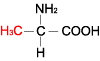

Amino acids are the building blocks of proteins and their existence in soil solution is a product of microbial breakdown of organic materials and larger organic compounds.
Amino-N represents a very minor to moderate fraction of plant N supply relative to NO3- and NH4+ on a global basis and it takes place only in very cold and wet environments (Kielland 1994; Näsholm et al. 1998; Jones et al. 2005; Näsholm et al. 2009; and Inselsbacher and Näsholm 2012).
In conclusion, organic N uptake, as amino acids and not large organic compounds, is recognized as occasionally possible in plant N uptake, but it occurs only in cold, low N mineralization environments with a limited number of plant species.
Inorganic N (NH4+, NO3-) are the primary forms of plant-available N in agricultural crop production systems and most natural terrestrial ecosystems.
References:
Bryant, R. B. 2025. Amino acids as fertilizer for agronomic crops: The next green revolution? Agronomy Journal, 117, e70145. https://doi.org/10.1002/agj2.70145
Chapin, F. S., III, McFarland, J., McGuire, A. D., Euskirchen, E. S., Ruess, R., and Kielland, K. (2003). The changing global carbon cycle: linking plant–soil carbon dynamics to global consequences. Biogeochemistry, 60(1), 1–3.
Gruffman, L., Albrectsen, B. R., and Näsholm, T. (2012). Plant nitrogen uptake in relation to plant–soil interactions. Plant and Soil, 350, 85–94.
(Note: Paper often cited for amino-N uptake dynamics.)
Inselsbacher, E., and Näsholm, T. (2012). The below-ground perspective of forest plants: soil provides mainly organic nitrogen for plants and their associated microorganisms. Plant and Soil, 350, 25–40.
Jones, D. L., Healey, J. R., Willett, V. B., Farrar, J. F., and Hodge, A. (2005). Dissolved organic nitrogen uptake by plants—an important N uptake pathway? New Phytologist, 168(1), 3–27.
Kielland, K. (1994). Amino acid absorption by arctic plants: implications for plant nitrogen cycling. Ecology, 75(8), 2373–2383.
Michelsen, A., Schmidt, I. K., Jonasson, S., Quarmby, C., and Sleep, D. (1996). Leaf 15N abundance of subarctic plants provides field evidence that ericoid, ectomycorrhizal and non- and arbuscular mycorrhizal species access different sources of nitrogen. Oecologia, 106, 407–411.
Näsholm, T., Ekblad, A., Nordin, A., Giesler, R., Högberg, M., and Högberg, P. (1998). Boreal forest plants take up organic nitrogen. Science, 279(5347), 859–862.
Näsholm, T., Kielland, K., and Ganeteg, U. (2009). Uptake of organic nitrogen by plants. New Phytologist, 182(1), 31–48.
Read, D. J. (1991). Mycorrhizas in ecosystems. New Phytologist, 118(3), 365–375.
Schimel, J. P., and Bennett, J. (2004). Nitrogen mineralization: challenges of a changing paradigm. Ecology, 85(3), 591–602.
Schimel, J. P., and Chapin, F. S., III. (1996). Tundra plant uptake of amino acid and NH₄⁺ nitrogen in situ: Plants compete well for amino acid N. Nature, 382, 103–105.
Stevenson, F.J. 1982. Origin and distribution of nitrogen in soils. In: F.J. Stevenson, Ed., Nitrogen in Agricultural Soils, American Society of Agronomy, Madison, WI, pp. 1-42.
First, I want to thank everyone who participated in last week's Vegetable Pest Losses Survey.
This year's survey included the return of the lettuce disease losses section. While several diseases were present and managed last season, downy mildew accounted for the majority of disease management costs by a wide margin. This really underscores the
impact that last spring's unusually rainy weather had on disease development across the Yuma lettuce production region.
No one can predict exactly what this upcoming spring will bring, but there has been discussion about the possibility of a strong El Niño leading to an extended monsoon season. If that proves true, the conditions would once again support spring
downy mildew development. The pathogen only needs about 3 to 4 hours of continuous leaf wetness to infect lettuce, so periods of overnight moisture, prolonged morning dew, or frequent rainfall when inoculum (spores) are present increase disease risk.
With that in mind, this seems like a good opportunity to review what is known about downy mildew and discuss strategies for its management.
Resistance in lettuce to Bremia lactucae, the causal oomycete pathogen behind downy mildew, is inherited in a gene-for-gene fashion, meaning one major gene product in the plant host interacts with one major gene product in the pathogen. When
resistance is present, this leads to an incompatible interaction between plant and pathogen and results in complete immunity to infection. Resistance genes in these types of interactions most often encode a protein molecule that acts like a burglar
alarm. These molecular sensors in the host bind to proteins secreted specifically by the pathogen, and when that happens a storm of defense responses is activated in the plant that excludes further infection. This is not the only mode of genetic resistance
found in plants, but it is often the most drastic and effective against obligate parasites like downy mildew.
But this simple gene-for-gene interaction often puts incredible selection pressure on the pathogen populations to change such that they can get around the resistance. By losing the molecule that the plant detects in order to initiate a defense response,
the pathogen becomes unrecognizable to the resistance genes a plant variety may have. Just like spraying the same mode of action over and over again leads to a pest population developing resistance to a pesticide, the same selection applies to genetic
resistance. The longer a resistance gene is deployed in a region, the more likely the pathogen population is to change in response until that resistance gene is no longer effective at managing the disease.
One of the biggest challenges with lettuce downy mildew is that B. lactucae is constantly changing over time. It exists as many different races, where each race has a different reaction to the resistance genes bred into lettuce varieties. You
can think of these races as different versions of the same pathogen. A lettuce variety that resists one race may still be susceptible to another.
These races are identified by testing them against a panel of lettuce varieties with known resistance genes. In the western United States, races are named by the International Bremia Evaluation Board-U.S. (IBEB-US) and are given names with a number followed by the country’s abbreviation, such as 8US, 9US, or 10US. The populations found in the western U.S. are different from those found in Europe, so each region uses its own independent naming system.
The downy mildew population has changed considerably over time. Earlier races (1US through 4US) are now rarely found in commercial lettuce production. During the 2000s and 2010s, races 5US through 8US became the most common. Race 9US was recognized after being detected repeatedly between 2015 and 2017, and the newest officially recognized race, 10US, was designated in 2025. Below is a pie chart showing the relative frequency of the races identified from 114 Yuma County downy mildew samples between 2023-2024:

Figure 1: Pathotyping results of 114 lettuce samples from Yuma County collected between 2023 and 2024. Data source: https://bremia.ucdavis.edu/bremia_database_main.php
The results show that much of the downy mildew population found in Yuma County is made up of novel strains of Bremia lactucae that have not yet been officially classified as a race. An official race is only recognized after it has been shown to be stable and widespread over multiple locations and growing seasons. These newer strains may disappear over time, or they may eventually become established and earn an official race designation. In the meantime, this means growers and lettuce breeders in Yuma County are often dealing with strains that can dodge the resistance in some lettuce varieties before those strains are common enough to be officially recognized. It also highlights why relying on resistance alone is not enough to manage the disease.
Table 1: Pathotyping and fungicide sensitivity results of samples from Yuma County collected in 2025.

This trend appears to be continuing. All of the downy mildew samples sent for race testing last season were identified as novel strains rather than known, officially designated races.
It's impossible to predict exactly how these new strains will respond to the resistance genes found in today's commercial lettuce varieties. However, because they have not been previously characterized, they are more likely to overcome existing genetic
resistance than the races we already know about.
New strains develop naturally over time. They can arise when different strains exchange genetics (i.e. intermate) or through random mutations. When growers plant varieties with similar resistance packages over large areas, the pathogen population
is placed under strong selection pressure. Any strain that happens to acquire the ability to infect those resistant varieties gains a major advantage and gets to reproduce without competition where other strains cannot. Over just a few disease
cycles, those successful strains can become much more common in the population until they are the predominant strain overall.
An important point to remember is that the resistance bred into commercial lettuce varieties is not wearing out or becoming weaker over time. The genetics in the lettuce remain just as effective as when the variety was released. What changes is the
pathogen. As the downy mildew population evolves new strains emerge that can bypass resistance genes that previously worked very well.
That means that varieties carrying resistance to races 5US through 10US are still doing exactly what they were designed to do. They continue to suppress those known races and help prevent them from becoming widespread in commercial fields. So, if
you experience significant downy mildew in a field planted with a variety that has a strong resistance package, the culprit is most likely one of these newer, uncharacterized strains rather than a failure of the variety itself.
Unfortunately, Bremia lactucae can evolve much faster than scientists can identify new races and breeders can develop and release resistant varieties. That's why no resistance package should be viewed as a stand-alone solution.
This is also why extension, researchers, and the seed and crop protection industries place so much emphasis on the integrated pest management (IPM) concept. Genetic resistance is an essential tool, but it works best and remains the most sustainable when combined with other management practices. For novel strains that can slip past host resistance, timely fungicide applications and other disease management strategies become especially important for maintaining control.

Figure 2: Mean disease severity by treatment. Disease severity was determined by rating 10 plants within each of the five replicate plots per treatment using the following rating system: 0 = no downy mildew present; 1 = downy mildew present on bottom leaves of plant; 2 = downy mildew present on bottom leaves and lower wrapper leaves; 3 = downy mildew present on bottom leaves and all wrapper leaves; 4 = downy mildew present on bottom leaves, wrapper leaves, and cap leaf; 5 = downy mildew present on entire plant. Disease severity is displayed as the mean of five replicates across all three lettuce varieties and bars show a 95% confidence interval around the mean calculated from individual treatment data. Compact letter display (CLD) above boxes show significantly different treatments (Kruskal-Wallis ANOVA and Dunn’s test). Boxes sharing the same letter(s) are not significantly different from one another. Fb = “followed by” in the rotation. Not all products are registered yet for use in lettuce. The inclusion of specific fungicide products or formulations in these trials does not constitute an endorsement or recommendation over other labeled products.
The most effective way to manage lettuce downy mildew is to use an integrated approach. Plant varieties with a strong resistance package against races 5US through 10US, and pair that resistance with timely, full-label-rate fungicide applications when environmental conditions favor disease. This combination provides the broadest and most reliable protection against both known races and the novel strains that continue to emerge in Yuma County.
If you have any concerns regarding the health of your plants/crops please consider submitting samples to the Yuma Plant Health Clinic for diagnostic service or booking a field visit with me:
Christopher Detranaltes, Ph.D.
Cooperative Extension – Yuma County
Email: cdetranaltes@arizona.edu
Cell: 602-689-7328
6425 W 8th St Yuma, Arizona 85364 – Room 109PBS News recently did a story on the importance of Yuma’s winter vegetable production and the pressures the Western US is facing due to water scarcity. The story features insights from local growers Matt McGuire, JV Smith Companies and Jon Dinsmore, Dinsmore Farms, as well as Arizona Department of Agriculture Director, Paul Brierley. The report is well done, covering the basics of Yuma agriculture and the water shortage issues the industry is facing. It’s a quality piece, worth a listen.
Check it out by clicking here or on the image below.
Fig. 1. PBS NewsHour: “Arizona Farmers Forced to Adapt as Main Water Source Dries Up” story. (Photo Credits: PBS News)
What's Coming This Season
The University of Arizona Cooperative Extension in Yuma is launching an exciting new research trial that could reshape how we approach weed management and lettuce thinning in specialty agriculture. With funding from the Arizona Iceberg Lettuce Research Council (AILRC), we're evaluating the performance of robotic weeding and thinning technologies, and the results could be significant for growers across the desert Southwest.
This isn't just another field trial. This is about understanding whether precision robotics can deliver on their promise to reduce labor demands, improve crop quality, and maintain the same level of weed control that growers have come to expect from traditional hand weeding and cultivation.
The Trial Design
Our research team is comparing the performance of robotic weeding and thinning systems directly against conventional hand weeding and thinning, the industry standard that growers have relied on for decades. This head-to-head comparison will give us real data on how these technologies perform under actual field conditions in our region.
The trial is examining multiple critical factors. We're looking at weed control efficacy across different weed species, because not all weeds respond the same way to mechanical and precision spray control, and that matters. We're evaluating crop safety and plant vigor to make sure the technology doesn't compromise the crop itself. And we're assessing the practical logistics of deployment, which is just as important as the technology's performance on paper.
Why This Matters
Robotic weeding and thinning technology represents a significant shift in how we can approach labor-intensive operations. For specialty crops like lettuce and other Cole crops, hand weeding and thinning have traditionally been necessary to achieve the precision and quality standards the market demands. But labor availability, consistency, and cost are ongoing challenges for growers.
If robotic systems can deliver comparable or superior results while addressing some of these challenges, that changes the economics of production. It also opens conversations about how precision technology can reduce our reliance on certain inputs while improving outcomes.
Connected to the Desert Difference Conference
This trial is running in conjunction with The University of Arizona’s Yuma Center of Excellence for Desert Agriculture (YCEDA), Cooperative Extension, and the Yuma Agricultural Center, in partnership with Western Growers, proudly present The Desert Difference Conference. This important regional event brings together growers, researchers, industry partners, and technology innovators. The timing allows us to share preliminary insights and connect with stakeholders who are directly interested in these innovations.
The conference provides a platform for real conversations about what's working, what's not, and what growers actually need from technology. That kind of direct feedback shapes how we interpret the data and what recommendations we make going forward.
The Research Process
Over the coming weeks and months, our team will be collecting detailed data from multiple technologies. We'll be documenting weed control performance, evaluating crop responses, and assessing the practical aspects of deployment. The goal is to provide growers with evidence-based information they can use to make informed decisions about whether robotic systems make sense for their operations.
This is rigorous work. We're not just looking at whether the robots work in ideal conditions. We're stress-testing them under real-world constraints, including diverse weed species.
Stay Tuned
We'll be sharing results from this trial as the season progresses. This research has the potential to contribute meaningful insights to the conversation about precision agriculture, labor challenges, and the future of specialty crop production in our region.
Several biological insecticides can be used to suppress diamondback moth (DBM) in Brassicas, and beet armyworm (BAW) and cabbage looper (CL) in both Brassicas and lettuces. However, performance varies by product and pest. This information is based on insecticide efficacy trials conducted in Yuma, AZ, over the last three growing seasons.
Diamondback moth:
In the desert, the most effective organic insecticide option for controlling DBM is XenTari, with DiPel and Entrust providing intermediate levels of suppression. Tank mixes of DiPel and Pyganic, or XenTari and Pyganic, may result in only marginal DBM suppression. Pyganic alone did not provide any DBM suppression in our evaluations and did not help when used in rotation with Entrust or XenTari (Fig. 1&2; Calvin et al. 2025). EcoWorks (neem-based insecticide) and Agree (Bt) resulted in approximately 50% reduction of DBM (Fig. 1).

Figure 1. Comparisons of selected organic insecticides against diamondback moths in
cabbage. Each treatment received 1 insecticide application weekly for 3 weeks.

Figure 2. Comparisons of Entrust (4 fl oz/ac), XenTari (1.5 lbs/ac), and Pyganic (15.61 fl
oz/ac) in repeated applications and in rotation against the diamondback moths in
cabbage. Each treatment received 1 insecticide application weekly for 3 weeks.
Beet Armyworm:
Several insecticides and insecticide mixes, including XenTari, XenTari + Pyganic, and Entrust, are the most effective biological insecticides for BAW suppression. Aza-Direct, Dipel, and a tank mix of Dipel and Pyganic can provide an intermediate level of suppression (Fig. 3; Calvin et al. 2025). Rotating Entrust, XenTari, and Pyganic can provide an approximate level of BAW suppression to that of repeated application of Entrust or XenTari. Our data suggest that applying Xentari or Entrust first, and Pyganic second or third in a rotation program, can result in more desirable BAW suppression (Figure 4).

Figure 3. Comparisons of selected organic insecticides against beet armyworms in
cabbage. Each treatment received 1 insecticide application weekly for 3 weeks.

Figure 4. Comparisons of Entrust (4 fl oz/ac), XenTari (1.5 lbs/ac), and Pyganic (15.61 fl
oz/ac) in repeated applications and in rotation against the beet armyworm in cabbage.
Each treatment received 1 insecticide application weekly for 3 weeks.
Cabbage Looper:
We observed low levels of cabbage looper mortality with most of the biological insecticides tested in cabbage. Entrust resulted in the highest suppression of cabbage loopers. Dipel, XenTari, and EcoWorks resulted in intermediate but marginal levels of cabbage loopers suppression (Fig. 5). EcoWorks is a neem-based insecticide like Neemix and Aza-Direct. In cauliflower, Entrust, Captiva Prime, and Agree provided CL suppression approaching 50%. XenTari, Pyganic, and Grandevo only resulted in marginal suppression (Fig. 6). In lettuce, Entrust and Dipel resulted in the most desirable CL control, followed by PFR-97 and AzaDirect. Pyganic, Botanigard, and Botanigard maxx provided greater than 50% suppression of CL while XenTari, Venerate, and Agree provided suppression levels approaching 50% (Fig. 7).

Figure 5. Comparisons of selected organic insecticides against cabbage loopers in
cabbage. Each treatment received 1 insecticide application weekly for 3 weeks.

Figure 6. Comparisons of selected organic insecticides against cabbage loopers in
cauliflower. Each treatment received 1 insecticide application. Only 1 week of data,
collected 6 days after treatment, is reported.

Figure 7. Comparisons of selected organic insecticides against cabbage loopers in head
lettuce. Each treatment received two insecticide applications, with one application per
week. Average data collected 6 days after treatment-1 and 2 days after treatment-2 is
reported.
Additional Reading Materials:
1- Calvin W., E. Contreras, M. Keith, and J. Velasco. 2025. Organic-Allowed Insecticide Options for the Management of Six Major Insect Pests in Arizona’s Vegetable Crops. University of Arizona Extension Publication. az2157. https://extension.arizona.edu/publication/organic-allowed-insecticide-options-management-sixmajor-insect-pests-arizonas
2- Calvin, W., E. Contreras, M. Keith, and J. Velasco. 2025. Organic Insecticides Efficacy Against Lepidopteran Pests in Cabbage in Arizona, 2024. Arthropod Management Test. 50: tsaf141, https://doi.org/10.1093/amt/tsaf141
3- Calvin, W., E. Contreras, M. Keith, and J. Velasco. 2025. Efficacy Of Organic-Allowed Insecticides Against Diamondback Moth in Cabbage, 2025. Arthropod Management Test. 50: tsaf142, https://doi.org/10.1093/amt/tsaf142
To view this article as a PDF, click here and hit download.
A recent statewide television news report highlighted our research and Extension program at the University of Arizona’s Yuma Agricultural Center, focusing on our efforts to improve water-use efficiency in Yuma’s high-value leafy-green production system. With ongoing drought conditions reducing flows in the Colorado River—our region’s primary irrigation source developing strategies to optimize water use has become an urgent priority for growers across Arizona.
The report featured our work evaluating a biostimulant, in combination with precision soil-moisture–sensor–guided irrigation and organic soil management, as an integrated approach to enhance crop performance under limited-water conditions. Organic production systems are particularly important in this context because they rely on soil health, biological activity, and non-synthetic inputs to sustain crop productivity. Improving water-use efficiency within organic systems not only supports environmental stewardship goals but also helps growers maintain yield stability under increasing resource constraints.
This research is strengthened through continuous collaboration with my colleagues at the Yuma Agricultural Center and the Yuma County Cooperative Extension. Their technical expertise, field support, and commitment to grower engagement are essential components of our program’s success, ensuring that research findings translate effectively into practical applications for the region’s vegetable industry.
Advancing Research Through Integrated Approaches
Our field trials are examining the effects of a biostimulant product known to support nutrient-use efficiency, root development, and overall plant resilience. While the biostimulant alone provides measurable physiological benefits, our findings show that the greatest improvements occur when it is combined with sensor-based irrigation scheduling and organic fertility practices. These practices form the foundation of organic production systems, where enhancing soil biological function and nutrient cycling is critical for maintaining crop vigor in the absence of synthetic fertilizers.
This integrated strategy has demonstrated strong potential to enhance water-use efficiency and maintain crop vigor under limited-water conditions. The resulting knowledge plays a vital role in supporting the long-term productivity and sustainability of Yuma’s leafy-green industry, which supplies approximately 90% of the nation’s winter lettuce.
Full Media Coverage
Full AZFamily story: https://www.azfamily.com/2025/12/02/university-arizona-researchers-test-new-ways-grow-lettuce-with-less-water/
VegIPM Update Vol. 17, Num. 15
July 22, 2026
Results of trap catches below!!
Whitefly: Adult activity remains steady across locations; above average for this time of the year, especially high numbers seen in North Gila Valley. Historically, whitefly numbers peak in July.
Thrips: Adult thrips activity remained low over the last two weeks. About average for this time of the year. Historically, thrips numbers remain low until Sept-Oct.