Soils with excess soluble salts, saline soils, and/or excess sodium Na+ concentrations (sodic) are a natural feature of desert soils and common in arid land agriculture. This is primarily due to an accumulation of soluble salts near the soil surface as water evaporates from and the process is driven largely by the intense evaporative demand from the arid desert environment.
A saline soil is a problem in crop production systems because of the sensitivity of crop plants to salinity, although plants vary in their degree of sensitivity. The period of greatest plant sensitivity to salinity is in the early stages of development, during germination and stand establishment.
A sodic soil is a problem in crop production systems because of the adverse effects of excess sodium on soil structure, causing a dispersion of soil particles and the breakdown of soil aggregates. This leads to poor water infiltration and percolation in the soil profile.
The development of saline and sodic conditions does not happen rapidly; the symptoms are commonly slow and hard to see in their development, until they are a problem. Thus, two things are important for field management: 1) regular soil samples and 2) field observations of crop and soil conditions.
Some fundamental points regarding the management of saline and/or sodic soils are outlined in the following section.
1. A saline soil by definition has an electrical conductivity of the soil solution (extract, ECe) of ECc ≥ 4 dS/m. Functionally and practically, saline soils have sufficient soluble salts to interfere with and diminish plant growth and development.
a. Soil salinity is a relative term or condition based on the critical salt sensitivity levels of the crop plant in question.
b. Plants vary tremendously in their degree of salt tolerance.
c. Reclamation and management of soil salinity requires an understanding of the specific level of sensitivity of the target plant to salinity.
d. Saline soils commonly have good soil aggregation and structure.
e. Reclamation of saline soils requires sufficient water to accomplish leaching and the removal of soluble salts. Thus, good internal soil drainage is important.
2. Sodic soils have a high level of exchangeable sodium (Na+) on the soil cation exchange complex (CEC). Sodic soils by definition have an Exchangeable Sodium Percentage, ESP > 15 of the soil CEC, or a sodium adsorption ratio, SAR > 13 from the soil extract (calculated).
Sodic soil reclamation does require an amendment that will facilitate the chemical exchange of Na+, usually from a calcium (Ca2+) source, such as gypsum (CaSO4).
3. Reclamation for saline soil requires additional irrigation water for leaching. Chemical amendments are not necessary for soluble salt removal.
An effective and straightforward method of calculating a leaching requirement (LR) can be calculated with the following equation that was presented by the USDA Salinity Laboratory (Ayers and Westcot, 1989).
Leaching Requirement (LR) Calculation:

Where:
ECw= salinity of the irrigation water, electrical conductivity (dS/m)
ECe= critical plant salinity tolerance, electrical conductivity (dS/m)
4. Saline soils do NOT need amendments for reclamation or management. Only leaching is needed.
5. Sodic soil reclamation involves a two-step process:
1) Exchange of Na with Ca and
2) leaching of soluble Na+ from the crop root zone.
6. Adequate soil leaching is required in both cases of saline and sodic soils.
a. In the case of sodic soil reclamation, the leaching needs to occur after appropriate amendment applications for Na+exchange with a suitable cation such as Ca2+.
7. Adequate drainage is necessary to accomplish sufficient leaching of solutes through the soil profile and below the root zone in the reclamation of both saline and sodic soils.
8. Irrigation systems capable of delivering sufficient water for leaching are necessary.
9. Crop rotation systems are important in leaching and salinity management.
10. Good field observations of crop growth and development in conjunction with regular soil and water sample analysis are key elements to the management of salinity and sodicity in agricultural fields.
For example, young plants in the germination and seedling stages of development are most susceptible to salinity and water stress. Abnormal amounts of seedling damage and/or difficulties in germination can often be early signs of increasing soil salinity.
Also, early signs of increasing salinity are often observed with plants demonstrating water stress with plant-available water levels in the soil that should seemingly be adequate for maintaining non-stressed plants.
Thus, fields that are showing signs of water stress and require irrigation in shorter intervals than usual can possibly be an early sign of increasing salinity and it is good to follow-up with a good set of soil samples and a sample of the irrigation water to check.
Early identification of problems in the field with increasing Na concentrations are commonly noticed with increasing tendencies of the soils in the field to form surface crusts very easily, which reduces water infiltration into the soil surface. This is often recognized at the time planting and stand establishment with germination problems resulting from increasing degrees of soil crusting.
11. As demonstrated by the LR calculation in point 3, water quality is an important factor in the management of soil salinity. The soil chemical environment will develop an equilibrium condition in relation to irrigation water quality (salinity content) and field management. The soil solution will have a definite chemical signature from the irrigation water being applied.
12. Soil drainage is an important factor in the management of soil salinity and sodicity. Good drainage is essential for the leaching and removal of soluble salts and the leaching and removal of excess sodium in the case of a sodic soil.
First, I want to thank everyone who participated in last week's Vegetable Pest Losses Survey.
This year's survey included the return of the lettuce disease losses section. While several diseases were present and managed last season, downy mildew accounted for the majority of disease management costs by a wide margin. This really underscores the
impact that last spring's unusually rainy weather had on disease development across the Yuma lettuce production region.
No one can predict exactly what this upcoming spring will bring, but there has been discussion about the possibility of a strong El Niño leading to an extended monsoon season. If that proves true, the conditions would once again support spring
downy mildew development. The pathogen only needs about 3 to 4 hours of continuous leaf wetness to infect lettuce, so periods of overnight moisture, prolonged morning dew, or frequent rainfall when inoculum (spores) are present increase disease risk.
With that in mind, this seems like a good opportunity to review what is known about downy mildew and discuss strategies for its management.
Resistance in lettuce to Bremia lactucae, the causal oomycete pathogen behind downy mildew, is inherited in a gene-for-gene fashion, meaning one major gene product in the plant host interacts with one major gene product in the pathogen. When
resistance is present, this leads to an incompatible interaction between plant and pathogen and results in complete immunity to infection. Resistance genes in these types of interactions most often encode a protein molecule that acts like a burglar
alarm. These molecular sensors in the host bind to proteins secreted specifically by the pathogen, and when that happens a storm of defense responses is activated in the plant that excludes further infection. This is not the only mode of genetic resistance
found in plants, but it is often the most drastic and effective against obligate parasites like downy mildew.
But this simple gene-for-gene interaction often puts incredible selection pressure on the pathogen populations to change such that they can get around the resistance. By losing the molecule that the plant detects in order to initiate a defense response,
the pathogen becomes unrecognizable to the resistance genes a plant variety may have. Just like spraying the same mode of action over and over again leads to a pest population developing resistance to a pesticide, the same selection applies to genetic
resistance. The longer a resistance gene is deployed in a region, the more likely the pathogen population is to change in response until that resistance gene is no longer effective at managing the disease.
One of the biggest challenges with lettuce downy mildew is that B. lactucae is constantly changing over time. It exists as many different races, where each race has a different reaction to the resistance genes bred into lettuce varieties. You
can think of these races as different versions of the same pathogen. A lettuce variety that resists one race may still be susceptible to another.
These races are identified by testing them against a panel of lettuce varieties with known resistance genes. In the western United States, races are named by the International Bremia Evaluation Board-U.S. (IBEB-US) and are given names with a number followed by the country’s abbreviation, such as 8US, 9US, or 10US. The populations found in the western U.S. are different from those found in Europe, so each region uses its own independent naming system.
The downy mildew population has changed considerably over time. Earlier races (1US through 4US) are now rarely found in commercial lettuce production. During the 2000s and 2010s, races 5US through 8US became the most common. Race 9US was recognized after being detected repeatedly between 2015 and 2017, and the newest officially recognized race, 10US, was designated in 2025. Below is a pie chart showing the relative frequency of the races identified from 114 Yuma County downy mildew samples between 2023-2024:

Figure 1: Pathotyping results of 114 lettuce samples from Yuma County collected between 2023 and 2024. Data source: https://bremia.ucdavis.edu/bremia_database_main.php
The results show that much of the downy mildew population found in Yuma County is made up of novel strains of Bremia lactucae that have not yet been officially classified as a race. An official race is only recognized after it has been shown to be stable and widespread over multiple locations and growing seasons. These newer strains may disappear over time, or they may eventually become established and earn an official race designation. In the meantime, this means growers and lettuce breeders in Yuma County are often dealing with strains that can dodge the resistance in some lettuce varieties before those strains are common enough to be officially recognized. It also highlights why relying on resistance alone is not enough to manage the disease.
Table 1: Pathotyping and fungicide sensitivity results of samples from Yuma County collected in 2025.

This trend appears to be continuing. All of the downy mildew samples sent for race testing last season were identified as novel strains rather than known, officially designated races.
It's impossible to predict exactly how these new strains will respond to the resistance genes found in today's commercial lettuce varieties. However, because they have not been previously characterized, they are more likely to overcome existing genetic
resistance than the races we already know about.
New strains develop naturally over time. They can arise when different strains exchange genetics (i.e. intermate) or through random mutations. When growers plant varieties with similar resistance packages over large areas, the pathogen population
is placed under strong selection pressure. Any strain that happens to acquire the ability to infect those resistant varieties gains a major advantage and gets to reproduce without competition where other strains cannot. Over just a few disease
cycles, those successful strains can become much more common in the population until they are the predominant strain overall.
An important point to remember is that the resistance bred into commercial lettuce varieties is not wearing out or becoming weaker over time. The genetics in the lettuce remain just as effective as when the variety was released. What changes is the
pathogen. As the downy mildew population evolves new strains emerge that can bypass resistance genes that previously worked very well.
That means that varieties carrying resistance to races 5US through 10US are still doing exactly what they were designed to do. They continue to suppress those known races and help prevent them from becoming widespread in commercial fields. So, if
you experience significant downy mildew in a field planted with a variety that has a strong resistance package, the culprit is most likely one of these newer, uncharacterized strains rather than a failure of the variety itself.
Unfortunately, Bremia lactucae can evolve much faster than scientists can identify new races and breeders can develop and release resistant varieties. That's why no resistance package should be viewed as a stand-alone solution.
This is also why extension, researchers, and the seed and crop protection industries place so much emphasis on the integrated pest management (IPM) concept. Genetic resistance is an essential tool, but it works best and remains the most sustainable when combined with other management practices. For novel strains that can slip past host resistance, timely fungicide applications and other disease management strategies become especially important for maintaining control.

Figure 2: Mean disease severity by treatment. Disease severity was determined by rating 10 plants within each of the five replicate plots per treatment using the following rating system: 0 = no downy mildew present; 1 = downy mildew present on bottom leaves of plant; 2 = downy mildew present on bottom leaves and lower wrapper leaves; 3 = downy mildew present on bottom leaves and all wrapper leaves; 4 = downy mildew present on bottom leaves, wrapper leaves, and cap leaf; 5 = downy mildew present on entire plant. Disease severity is displayed as the mean of five replicates across all three lettuce varieties and bars show a 95% confidence interval around the mean calculated from individual treatment data. Compact letter display (CLD) above boxes show significantly different treatments (Kruskal-Wallis ANOVA and Dunn’s test). Boxes sharing the same letter(s) are not significantly different from one another. Fb = “followed by” in the rotation. Not all products are registered yet for use in lettuce. The inclusion of specific fungicide products or formulations in these trials does not constitute an endorsement or recommendation over other labeled products.
The most effective way to manage lettuce downy mildew is to use an integrated approach. Plant varieties with a strong resistance package against races 5US through 10US, and pair that resistance with timely, full-label-rate fungicide applications when environmental conditions favor disease. This combination provides the broadest and most reliable protection against both known races and the novel strains that continue to emerge in Yuma County.
If you have any concerns regarding the health of your plants/crops please consider submitting samples to the Yuma Plant Health Clinic for diagnostic service or booking a field visit with me:
Christopher Detranaltes, Ph.D.
Cooperative Extension – Yuma County
Email: cdetranaltes@arizona.edu
Cell: 602-689-7328
6425 W 8th St Yuma, Arizona 85364 – Room 109Plans are firming up for The Desert Difference: A Showcase of AgTech Opportunities for Growing in the Desert. The two-day event will be held November 13-14th in Yuma, AZ. The first day will be a Field Day, the second will be a standard conference with keynote speakers, breakout sessions and trade booths. Details of the event and Conference Day (Day 2) activities can be found here.
The focus of this article is the Field Day which will be held Wednesday, November 13th at the Yuma Agricultural Center. Registration begins at 7:00 am and the program starts at 7:30 am (agenda below). As with our previous AgTech Field Days, the educational workshop will feature 12 of the latest automated and robotic technologies for pest control and improved vegetable production being demonstrated in the field.
This year, we’ve added a twist we think you’ll like. We’ve asked people demonstrating equipment to treat one of their plots two weeks prior to the event. This way, attendees can “see” the end result of the treatment – how well an automated weeding machine technology actually controlled weeds, for example. A second set of plots, immediately adjacent to the pre-treated plots, will be used for a live demonstration of the equipment used.
As mentioned in previous articles, we would love to showcase as many innovations as possible. All live demo slots have been filled, however there are still openings for static displays. If you are interested in being added to the program, please let me know and we will do our best to try and accommodate you. It’s an open invitation - private companies, university and government researchers are all welcome.

Fig.1. Technologies for controlling weeds “pre-treating” plots two weeks prior to the AgTech Field Day. Weed control efficacy of the pre-treated plots along with the technology being operated in the field will be shown at the event.

Fig. 2. Field Day agenda (Day 1) for The Desert Difference: A Show case of AgTech Opportunities for Growing in the Desert event. More information about the event and Conference Day activities (Day 2) can be found here.
My name is Mazin Saber, and I serve as an Associate in Extension specializing in Weed Management at the School of Plant Sciences, University of Arizona/Yuma County Cooperative Extension, based at the Yuma Agricultural Center. My work focuses on developing innovative site-specific weed management strategies tailored to specialty crop systems in desert agriculture, aiming to establish effective and sustainable weed control programs. I currently lead a new weed control research initiative at the Yuma Agricultural Center.
My academic background includes a Bachelor’s degree in Agricultural Mechanization and a Master’s degree in Agronomy from the University of Basrah, Iraq. I also hold an M.E., and Ph.D. in Agricultural and Biological Engineering from the University of Florida, where my doctoral research focused on designing automated mechanical intra-row weed control system for row crops.
Previously, my research has involved quantitative assessment of crop water-use and salt balance in the Lower Colorado River region. By utilizing advanced tools such as Eddy Covariance to measure evapotranspiration across 14 major crops over multiple seasons on commercial farming, I have contributed to improving water use efficiency and enhancing the sustainability and competitiveness of desert agriculture.
As I build my weed management program, I am conducting an assessment survey to identify the most pressing weed management challenges. Your feedback is crucial to ensure this program meets your needs. Please take a few minutes to complete the survey using the link below.
https://uarizona.co1.qualtrics.com/jfe/form/SV_4Od09r4hPLThLz8
I am available for any discussions about weed issues on your farm and I am happy to arrange field visits or ride-alongs to better understand your specific challenges. Please feel free to reach out to me directly.
Integrated pest management (IPM) involves the utilization of a combination of several tactics for the effective management of pests. This concept was developed by entomologists and is currently adopted by pest managers to target various pests, including insects, weeds, and pathogens. Most IMP tactics fit well in both conventional and organic crop production. It is not uncommon that most pest management techniques (for organic or conventional production) are not very effective as a stand-alone tactic. Therefore, it is essential to use a combination of tactics that will complement each other to control the pests adequately. This is like a “many little hammers” approach, where each of the management tactics is a little hammer hammering on the pests, resulting in a cumulative suppression.
When developing an IPM program, it is important to prioritize planting resistant or tolerant crop varieties and adopting agricultural practices that promote plant health and resilience. Other practices, including physical, mechanical, or biological control, can be implemented to further reduce the pest populations. It is critical to conduct regular scouting to monitor pest populations and use economic thresholds to guide insecticide application decision-making.
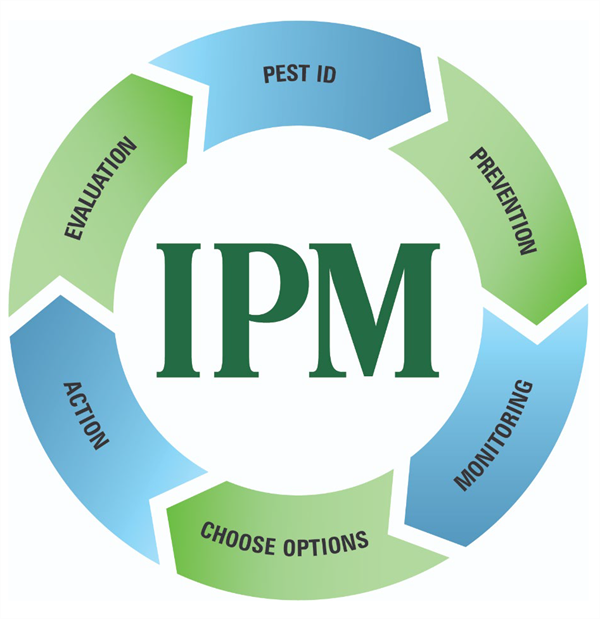
Figure 1. Integrated pest management cycle. 1st:pest identification; 2nd: prevention;
3rd: monitoring; 4th: select options; 5th: control action; 6th: evaluation.
Below are some IPM tactics that can be considered in your organic IPM programs:
Implementing IPM will result in economic benefits while preserving the environment and reducing negative impacts on human health. In other words, IPM aims at managing pests in an economically viable, socially acceptable, and environmentally safe manner. It is important to note that not all the IPM tactics are always viable in all situations, and IPM is not a one-size-fits-all solution.
Therefore, the selection of management techniques for an IPM program should be done on a case-by-case basis.
Out in the field, water is life. Every drop counts, especially in places like the desert Southwest, where summers run hot and dry, and winters bring little or no rainfall. Many farmers are asking an important question: Does organic lettuce really use less water than conventional lettuce?
To answer that, it helps to start with the soil. Think of soil as a sponge. In conventional systems, synthetic fertilizers often deliver nutrients quickly, but over time the soil can lose some of its natural structure and ability to hold moisture. Organic systems, however, are built on compost, cover crops, and other organic matter. This added organic matter improves soil structure, making it spongier. A healthier soil sponge can soak up rainfall, hold on to moisture longer, and release it more slowly to plant roots.
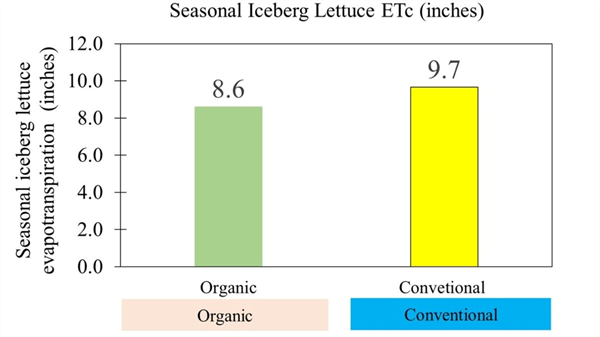
Last fall, at the Yuma Ag Center in Yuma, AZ, we conducted a field trial to measure seasonal water use in organic and conventional lettuce.
The results were encouraging. On average, organic lettuce used about one inch less water over the season compared to conventional lettuce. At first, one inch might not sound like much. But in real farm terms, it could mean skipping an entire irrigation, saving a day of labor, fuel, or electricity for pumping, and wear on equipment. That’s a meaningful saving, especially during a season when every drop counts.
Even more, these results suggest that water savings could grow when paired with improved lettuce hybrids, more efficient irrigation systems, and season-based irrigation scheduling. Each small step adds up, and together they can help farmers stretch water resources further without sacrificing yield or quality.
So yes, organic lettuce does use less water, thanks to soils that make every drop count. And in an era of tighter water supplies, that efficiency might be one of the best tools growers have
VegIPM Update Vol. 17, Num. 15
July 22, 2026
Results of trap catches below!!
Whitefly: Adult activity remains steady across locations; above average for this time of the year, especially high numbers seen in North Gila Valley. Historically, whitefly numbers peak in July.
Thrips: Adult thrips activity remained low over the last two weeks. About average for this time of the year. Historically, thrips numbers remain low until Sept-Oct.