Dr. J S. Famiglietti, is a Global Futures Professor and hydrologist with the School of Sustainability at Arizona State University (ASU) and he serves as the director for ASU’s Arizona Water Innovation Initiative. Famiglietti and his colleagues recently published an article in the Geophysical Research Letters journal (Abdelmohsen et al., 2025) with the American Geophysical Union (AGU) that describes the declining groundwater supplies in the lower Colorado River basin (LCRB). The methods for conducting this analysis are described in other publications (Rodell, Famiglietti et al., 2004; Rodell, Houser et al., 2004).
This research is valuable in providing important information regarding the current and future management of the Colorado River and LCRB groundwater supplies. In Arizona, 36% of the state’s water supply comes from the Colorado River and 41% from groundwater (Figure 1, ADWR, 2025). Agriculture uses 72% of the total Arizona water supply (Figure 2, ADWR, 2025).
As surface water supplies in the Colorado River have diminished over the past 25 years due to the ongoing drought in the southwest, conservation measures have resulted in reductions of allocations from the river. In response many areas, e.g. central Arizona, have turned to increasing groundwater withdrawals to supplement the difference.
In many discussions regarding the future management of Arizona water resources, groundwater sources are often considered for possible use and planning. In parts of the state with Active Management Areas (AMAs) there is a 100-year water supply requirement that must be proven before land can be developed (Figure 3; 1980 Groundwater Management Act (GWMA), Arizona Department of Water Resources (ADWR) 2017). Groundwater resources are often listed as future sources for development.
The Arizona GWMA has helped reduce groundwater depletion rates in some of the AMAs. But based on ADWR projections, some of the AMAs will not be able to meet the sustainability goals set in the GWMA to achieve safe yield by 2025 (ADWR, 2016, 2020). In addition, the Phoenix AMA is projected to encounter complete depletion by the end of the century based on groundwater simulations (ADWR, 2023).
It is important to note that only 18% of Arizona (by area) is subject to groundwater management, highlighting the urgent need for broader and more effective groundwater management across the entire LCRB.
Making assumptions on resources that might not exist is dangerous and reckless. In the process of trying to prove a 100-year water supply with a changing climate, the inclusion of groundwater resources are increasingly important. It is essential that we deal with facts and the truth and not hopeful thinking in planning for the future with issues like water resources.
This recent work by Abdelmohsen et al., (2025) is important in that it provides a good estimate of the groundwater supplies across the LCRB. Their results show very severely diminished levels of groundwater supplies in many parts of Arizona (Figure 4). Overall, this is good work with good methodology and conclusions.
However, in one aspect I believe their conclusions are flawed regarding their recommendations for agriculture to simply move away from water-intensive crops and flood irrigation and to utilize low-water use crops and irrigation systems such as drip irrigation to reduce overall water demand. That is a nice simple theory, and it is commonly advocated by scientists working in this arena and others that are probably well-intended but poorly informed of the facts (Richter et al., 2023 and Famiglietti, 2014).
Important conclusions from this study show that because of the increasing aridification along with increasing demand in this region, between 2015 to 2024 the level of groundwater storage across the LCRB decreased by a factor of 3. It is estimated that a total of 42.3 million acre-feet (MAF) of water has been lost in this period across the entire basin from all sources and that 27.8 MAF of this loss was from groundwater, which is estimated to be roughly equivalent to the full Lake Mead capacity.
Abdelmohsen et al., (2025) suggest that progress towards groundwater sustainability in the Colorado River basin could be achieved by reducing current annual extraction in balance current rates of depletion. This translates to a reduction in current annual groundwater depletion of 0.35 km3/year (0.28 MAF) in the upper basin and 1.5 km3/year (1.22 MAF) in the lower basin.
To put that in perspective, the total annual water consumption in Arizona is approximately 7.0 MAF (ADWR, 2025). The Drought Contingency Plan reduction for Tier 1 in Arizona is 512 thousand acre-feet (KAF) and Tier 2a is 592 KAF.
With a current population of 7.6M in Arizona and a projected population of 8.9 to 9.6M people by 2050, the pressures and competition for water among all sectors will be increasingly intense. In Maricopa County, the population is projected to reach between 6.0 and 7.0M by 2050.
Arizona agriculture will be continually forced to deal with the increasing urban population and the diminishing water supplies. The recent results coming from Abdelmohsen et al., (2025) provide a valuable assessment of groundwater supplies in the LCRB and Arizona and the importance of conservation measures.
This also reinforces the critical need for Arizona to develop functional groundwater legislation for areas beyond the established AMAs.
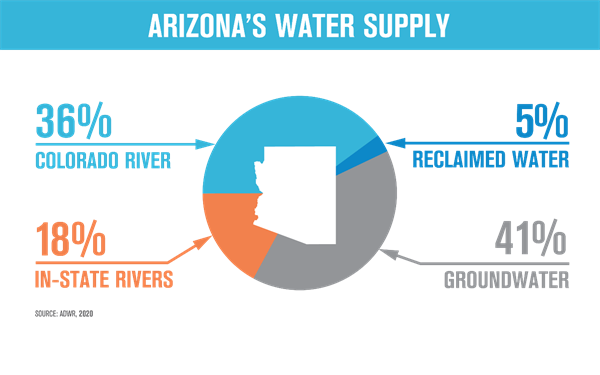
Figure 1. Sources of the Arizona water supply. Source: Arizona Department of Water
Resources (ADWR).
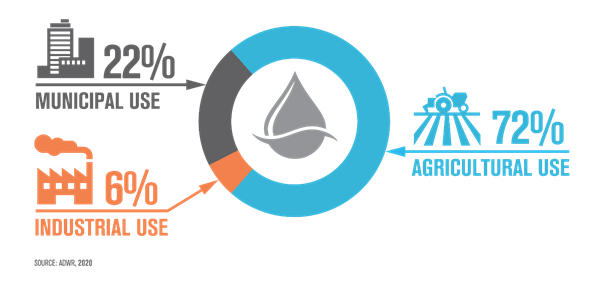
Figure 2. Arizona’s water use by sector. Source: Arizona Department of Water Resources
(ADWR).
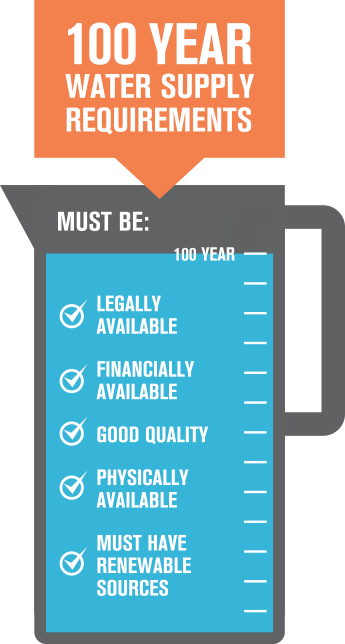
Figure 3. One-hundred-year water supply requirements for Active Management Areas in
Arizona. Source: ADWR, 2025.
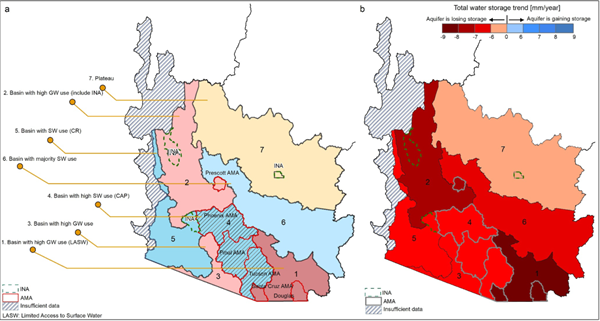
Figure 4. Categorization of groundwater basins based on water usage in the LCRB. (a) This
classification map utilizes data from the University of Arizona and the Arizona Department
of Water Resources (ADWR, 2016) to show the predominant source of water. Basins with
significant access to surface water are shown in blue; (b) TWS trends (mm/year) from
GRACE/FO for the groundwater basins in (a). The basins with the greatest loss rates are
shown by progressively darker red colors. Source: Abdelmohsen, et al. 2025.
References:
Abdelmohsen, K., Famiglietti, J. S.,Ao, Y.Z., Mohajer, B., & Chandanpurkar, H. A. 2025. Declining fresh water availability in the Colorado River basin threatens sustainability of its critical groundwater supplies. Geophysical Research Letters, 52,e2025GL115593. https://doi.org/10.1029/2025GL115593
Arizona Department of Water Resources (ADWR).2016. Arizona's strategic vision for water supply sustainability. Arizona Department of Water Resources (ADWR). Retrieved from https://new.azwater.gov/sites/default/files/ADWR_2016_Strategic_Vision.pdf
Arizona Department of Water Resources (ADWR). 2017. 1980 Groundwater Management Act. https://www.azwater.gov/news/articles/2017-01-23-3
Arizona Department of Water Resources (ADWR).2020 Arizona groundwater management report for active management areas 2020. Arizona Department of Water Resources (ADWR). Retrieved from https://new.azwater.gov
Arizona Department of Water Resources(ADWR). 2023. Groundwater sustainability simulations: 2023 Phoenix AMA groundwater outlook. Arizona Department of Water Resources (ADWR).
Arizona Department of Water Resources.2025. Arizona’s Water Supplies. https://www.arizonawaterfacts.com/water-your-facts
Famiglietti, J. S. 2014. The global groundwater crisis. Nature Climate Change, 4(11), 945–948. https://www.nature.com/articles/nclimate2425
Richter, B. D., Ao, Y., Lamsal, G., Wei, D., Amaya, M., Marston, L., & Davis, K. F. 2023. Alleviating water scarcity by optimizing crop mixes. Nature Water 2023, 1(12), 1035–1047. https://www.nature.com/articles/s44221-023-00155-9
Rodell, M., Famiglietti, J. S., Chen,J., Seneviratne, S. I., Viterbo, P., Holl, S., &Wilson, C. R. (2004a).Basin scale estimates of evapotranspiration using GRACE and other observations. Geophysical Research Letters, 31(20), L20504. https://doi.org/10.1029/2004GL020873
Rodell, M., Houser, P. R., Jambor, U., Gottschalck, J., Mitchell, K., Meng, C.‐J., et al. (2004b). The global land data assimilation system. Bulletin America Meteorology Social, 85(March),381–394. https://doi.org/10.1175/BAMS853381
First, I want to thank everyone who participated in last week's Vegetable Pest Losses Survey.
This year's survey included the return of the lettuce disease losses section. While several diseases were present and managed last season, downy mildew accounted for the majority of disease management costs by a wide margin. This really underscores the
impact that last spring's unusually rainy weather had on disease development across the Yuma lettuce production region.
No one can predict exactly what this upcoming spring will bring, but there has been discussion about the possibility of a strong El Niño leading to an extended monsoon season. If that proves true, the conditions would once again support spring
downy mildew development. The pathogen only needs about 3 to 4 hours of continuous leaf wetness to infect lettuce, so periods of overnight moisture, prolonged morning dew, or frequent rainfall when inoculum (spores) are present increase disease risk.
With that in mind, this seems like a good opportunity to review what is known about downy mildew and discuss strategies for its management.
Resistance in lettuce to Bremia lactucae, the causal oomycete pathogen behind downy mildew, is inherited in a gene-for-gene fashion, meaning one major gene product in the plant host interacts with one major gene product in the pathogen. When
resistance is present, this leads to an incompatible interaction between plant and pathogen and results in complete immunity to infection. Resistance genes in these types of interactions most often encode a protein molecule that acts like a burglar
alarm. These molecular sensors in the host bind to proteins secreted specifically by the pathogen, and when that happens a storm of defense responses is activated in the plant that excludes further infection. This is not the only mode of genetic resistance
found in plants, but it is often the most drastic and effective against obligate parasites like downy mildew.
But this simple gene-for-gene interaction often puts incredible selection pressure on the pathogen populations to change such that they can get around the resistance. By losing the molecule that the plant detects in order to initiate a defense response,
the pathogen becomes unrecognizable to the resistance genes a plant variety may have. Just like spraying the same mode of action over and over again leads to a pest population developing resistance to a pesticide, the same selection applies to genetic
resistance. The longer a resistance gene is deployed in a region, the more likely the pathogen population is to change in response until that resistance gene is no longer effective at managing the disease.
One of the biggest challenges with lettuce downy mildew is that B. lactucae is constantly changing over time. It exists as many different races, where each race has a different reaction to the resistance genes bred into lettuce varieties. You
can think of these races as different versions of the same pathogen. A lettuce variety that resists one race may still be susceptible to another.
These races are identified by testing them against a panel of lettuce varieties with known resistance genes. In the western United States, races are named by the International Bremia Evaluation Board-U.S. (IBEB-US) and are given names with a number followed by the country’s abbreviation, such as 8US, 9US, or 10US. The populations found in the western U.S. are different from those found in Europe, so each region uses its own independent naming system.
The downy mildew population has changed considerably over time. Earlier races (1US through 4US) are now rarely found in commercial lettuce production. During the 2000s and 2010s, races 5US through 8US became the most common. Race 9US was recognized after being detected repeatedly between 2015 and 2017, and the newest officially recognized race, 10US, was designated in 2025. Below is a pie chart showing the relative frequency of the races identified from 114 Yuma County downy mildew samples between 2023-2024:

Figure 1: Pathotyping results of 114 lettuce samples from Yuma County collected between 2023 and 2024. Data source: https://bremia.ucdavis.edu/bremia_database_main.php
The results show that much of the downy mildew population found in Yuma County is made up of novel strains of Bremia lactucae that have not yet been officially classified as a race. An official race is only recognized after it has been shown to be stable and widespread over multiple locations and growing seasons. These newer strains may disappear over time, or they may eventually become established and earn an official race designation. In the meantime, this means growers and lettuce breeders in Yuma County are often dealing with strains that can dodge the resistance in some lettuce varieties before those strains are common enough to be officially recognized. It also highlights why relying on resistance alone is not enough to manage the disease.
Table 1: Pathotyping and fungicide sensitivity results of samples from Yuma County collected in 2025.

This trend appears to be continuing. All of the downy mildew samples sent for race testing last season were identified as novel strains rather than known, officially designated races.
It's impossible to predict exactly how these new strains will respond to the resistance genes found in today's commercial lettuce varieties. However, because they have not been previously characterized, they are more likely to overcome existing genetic
resistance than the races we already know about.
New strains develop naturally over time. They can arise when different strains exchange genetics (i.e. intermate) or through random mutations. When growers plant varieties with similar resistance packages over large areas, the pathogen population
is placed under strong selection pressure. Any strain that happens to acquire the ability to infect those resistant varieties gains a major advantage and gets to reproduce without competition where other strains cannot. Over just a few disease
cycles, those successful strains can become much more common in the population until they are the predominant strain overall.
An important point to remember is that the resistance bred into commercial lettuce varieties is not wearing out or becoming weaker over time. The genetics in the lettuce remain just as effective as when the variety was released. What changes is the
pathogen. As the downy mildew population evolves new strains emerge that can bypass resistance genes that previously worked very well.
That means that varieties carrying resistance to races 5US through 10US are still doing exactly what they were designed to do. They continue to suppress those known races and help prevent them from becoming widespread in commercial fields. So, if
you experience significant downy mildew in a field planted with a variety that has a strong resistance package, the culprit is most likely one of these newer, uncharacterized strains rather than a failure of the variety itself.
Unfortunately, Bremia lactucae can evolve much faster than scientists can identify new races and breeders can develop and release resistant varieties. That's why no resistance package should be viewed as a stand-alone solution.
This is also why extension, researchers, and the seed and crop protection industries place so much emphasis on the integrated pest management (IPM) concept. Genetic resistance is an essential tool, but it works best and remains the most sustainable when combined with other management practices. For novel strains that can slip past host resistance, timely fungicide applications and other disease management strategies become especially important for maintaining control.

Figure 2: Mean disease severity by treatment. Disease severity was determined by rating 10 plants within each of the five replicate plots per treatment using the following rating system: 0 = no downy mildew present; 1 = downy mildew present on bottom leaves of plant; 2 = downy mildew present on bottom leaves and lower wrapper leaves; 3 = downy mildew present on bottom leaves and all wrapper leaves; 4 = downy mildew present on bottom leaves, wrapper leaves, and cap leaf; 5 = downy mildew present on entire plant. Disease severity is displayed as the mean of five replicates across all three lettuce varieties and bars show a 95% confidence interval around the mean calculated from individual treatment data. Compact letter display (CLD) above boxes show significantly different treatments (Kruskal-Wallis ANOVA and Dunn’s test). Boxes sharing the same letter(s) are not significantly different from one another. Fb = “followed by” in the rotation. Not all products are registered yet for use in lettuce. The inclusion of specific fungicide products or formulations in these trials does not constitute an endorsement or recommendation over other labeled products.
The most effective way to manage lettuce downy mildew is to use an integrated approach. Plant varieties with a strong resistance package against races 5US through 10US, and pair that resistance with timely, full-label-rate fungicide applications when environmental conditions favor disease. This combination provides the broadest and most reliable protection against both known races and the novel strains that continue to emerge in Yuma County.
If you have any concerns regarding the health of your plants/crops please consider submitting samples to the Yuma Plant Health Clinic for diagnostic service or booking a field visit with me:
Christopher Detranaltes, Ph.D.
Cooperative Extension – Yuma County
Email: cdetranaltes@arizona.edu
Cell: 602-689-7328
6425 W 8th St Yuma, Arizona 85364 – Room 109Interested in staying up to date on the latest robotic ag technologies? FIRA USA and a number of other entities are organizing a 3-day forum focused on autonomous farming and agricultural robotics solutions. The event will be held October 22-24 in Woodland/Sacramento, CA. The program includes top-level keynote speakers, breakout sessions, a trade show and field demos. Over 35 robots will be demoed and/or on display including 8 machines designed for weeding vegetable crops. Some of the latest technologies for in-row weeding will be featured including lasers (2 companies) and high precision spot spraying (3 companies). If you are interested in ag tech, FIRA 2024 promises to be a quality event and one well worth attending. For more information, visit https://fira-usa.com/.

Fig. 1. Robotic technologies on display and being demoed in the field at
FIRA USA 2024. The event will be held October 22-24 in Woodland/Sacramento,
CA. (Photo credits: FIRA USA).

In the August 21, 2024 update we mentioned our plans to do a demonstrative trial at the Yuma agricultural center. This experiment was established on 10/2 and planted on 10/14. Sprinklers started on10/15. A stand evaluation was done on 10/28 and Phytotoxicity and Goosefoot and Lambs quarter weed control evaluated yesterday. The treatments suggested by some of the people in the industry, where:
Treflan (trifluralin) Applied at 1.5pt/A pre-emergent on the flat ground incorporated mechanically by disking approximately at 4” depth, then make the beds and plant the crop to germinate with sprinkler irrigation. The same method was utilized for Prowl herbicide at the rate of 1 pint product per acre. Also Prowl non-incorporated was included, Devrinol2XL at 1 pt/A, Prefar at 6qt/A as well as a high rate of Goal (oxifuorfen)preemergence to evaluate and document phytotoxicity levels.
As mentioned, we have collected weed control data, which we plan to include in future updates.
Would you like to see how this treatments look? Some of the observations, even though expected are very interesting, such as the fact that 16 floz of Goal Tender preemergence didn’t allow goosefoot germination but similarly broccoli didn’t emerge.
Come to the NW corner of the Ag Center (you can’t miss it) and look at the plots and see the difference between Prowl mechanically incorporated and non-incorporated, compare it with Prefar and Devrinol. We put some very clear signs as you can see in the picture above. The experimental plots are 14x60ft so they are large enough to illustrate what would happen in a farm.
We thank you for your suggestions ...please come and let us know what you think!

We conducted a series of trials during Fall 2024 and Spring 2025 to evaluate the efficacy of organic-approved insecticides currently on the market. While some of the products evaluated were found to be effective, the results of our studies demonstrated that most of these marketed organic-approved insecticides had marginal to no efficacy against common insect pests that attack vegetable crops in the desert. When the insecticides were evaluated alone, the highest label rate was used; when assessed as a mixture of two products, each product was applied at half of the label rate.
Below, we list the insecticides that resulted in some level of suppression for each insect pest.
1- Brassica
Pale stripes flea beetle: Biolink (insect & bird repellent), Insect & Bird repellent mix with Pyganic, and Entrust mix with M-Pede can provide measurable suppression of pale stripe flea beetle. Multiple applications may be required to enhance seedling protection.
Whitefly: M-Pede performed best against whiteflies on brassicas, but Surround, Pyganic, and BotaniGard can also provide some marginal level of suppression. It is best to apply Surround and BotaniGard when the plants are small. Dense foliage prevents insecticide droplets from reaching the lower leaves, where most whiteflies are located on the plants.
Diamondback moth and Beet armyworms: XenTari, DiPel, Entrust, a tank mix of DiPel and Pyganic, or XenTari and Pyganic are the most effective options for controlling diamondback moth and beet armyworms. Starting with XenTari in a rotation program can lead to greater suppression of diamondback moths.
Green peach aphid: Aza-Direct can provide measurable (greater than 50% reduction) green peach aphid suppression on broccoli. Because Aza-Direct works as a growth regulator, it is recommended to apply it early in the season to allow the product sufficient time to work and enhance its efficacy.
2- Lettuce
Green peach aphid: Aza-Direct and M-Pede exhibited variable performance when applied to broccoli or lettuce. Aza-Direct performed better at controlling green peach aphid in broccoli, but M-Pede provided the greatest (>50% suppression) green peach aphid suppression in lettuce.
Thrips: Entrust can provide excellent (>90%) control of thrips nymphs and adults. In our studies, other bioinsecticides, such as Gargoil and Aza-Direct, also resulted in thrips suppression of approximately 40% and 50%, respectively. In a rotation program, Aza-Direct and/or Gargoil can be applied at the beginning of the season when thrips populations are low, and thrips injuries are less problematic.
Bioinsecticides and their active ingredients

In Yuma's arid agricultural landscape, selecting the right cover crops can significantly influence soil health, water management, and overall sustainability. Two notable options gaining attention among growers are Sudan grass and Sesbania. Sudan grass, a warm-season annual grass, is widely valued in Yuma for its ability to rapidly establish, providing excellent soil protection against erosion and wind. Its extensive root system enhances soil structure, boosts organic matter, and improves moisture retention, crucial for subsequent crops grown in desert conditions. Sesbania, a fast-growing legume, offers additional benefits. It excels at fixing atmospheric nitrogen, naturally enriching the soil and reducing the need for synthetic nitrogen fertilizers. Its deep taproot system penetrates compacted soil layers, improving water infiltration and reducing salinity levels, a common challenge in Yuma's agriculture.
Which Cover Crop Should You Choose?
The decision between Sudan grass and Sesbania depends largely on specific farm goals and challenges. If rapid establishment, erosion control, and increased organic matter are primary concerns, Sudan grass is an excellent choice. However, if the goal is to address soil fertility, nitrogen fixation, and salinity issues, Sesbania may be more beneficial. Using either Sudan grass or Sesbania as a cover crop in Yuma promotes healthier soils and supports sustainable farming practices, benefiting growers economically and environmentally. Considering these cover crops can be a strategic move toward enhanced agricultural productivity and long-term soil health in the region.
VegIPM Update Vol. 17, Num. 15
July 22, 2026
Results of trap catches below!!
Whitefly: Adult activity remains steady across locations; above average for this time of the year, especially high numbers seen in North Gila Valley. Historically, whitefly numbers peak in July.
Thrips: Adult thrips activity remained low over the last two weeks. About average for this time of the year. Historically, thrips numbers remain low until Sept-Oct.