We have now experienced 25 years of significant drought in the southwestern United States and northwestern Mexico. In the Colorado River basin (Figure 1), the annual flow of the Colorado River has decreased by approximately 19% in the 21st century compared to the 20th century.
From 1906 to 2000, the Colorado River basin averaged about 14.6 million acre-feet (MAF) annually. In the 21st century, average annual flows on the Colorado River have averaged approximately 12.5 MAF per year. This represents a decrease of about 1.75 MAF per year, which is approximately 19% less than the 20th-century average (https://www.congress.gov/crs-product/R45546).
This decline is attributed to the change in the climate with warming temperatures and reduced precipitation and is being referred to as a megadrought. The megadrought in the southwestern United States, beginning in 2000, is currently the driest multi-decade period in the region since at least 800 CE. This megadrought has been the driest in at least 1,200 years, exceeding a similar megadrought in the late 1500s. (Woodhouse, et al. 2010).
Long range climate models predict further reductions in Colorado River stream flows, with some projections showing declines of 5% to 30% compared to the 1971-2000 average by 2050 (Colorado Climate Center, 2023).
As a result, reservoirs are low throughout the region and the stress on water delivery systems is extreme. Recent projections by the U.S. Bureau of Reclamation indicate a high probability of water levels at Lake Mead in December 2026 to be lower than 1,050 ft. above sea level (Figure 2), which would trigger Tier 2a reductions based on the 2007 interim guidelines, Minute 323, lower basin drought contingency plan, and the binational water scarcity contingency plan (Figure 3).
However, all these conservation guidelines on the Colorado River will expire in 2026. Therefore, there is still the need for the delegations representing the Colorado River basin states to develop an agreement on a new set of conservation guidelines. At present, the lower basin states are in agreement, but the upper basin states will not accept the terms proposed by the lower basin states. Thus, they remain at an impasse.
Based on the Law of the River (The Law of the River: Foundational Documents and Programs, CRS, 2025), if the basin states are not able to decide on a new plan together, the U.S. Department of the Interior (DoI) and the Bureau of Reclamation (BoR) will have the responsibility for making the decisions.
At present, a new commissioner for the BoR has not been appointed by the new federal administration. However, based on my understanding from recent basin state meetings, the BoR has been more engaged under the Trump administration and that should be helpful. Stong leadership on these issues is urgently needed, and the situation is presenting a serious test on our system of governance on the Colorado River.
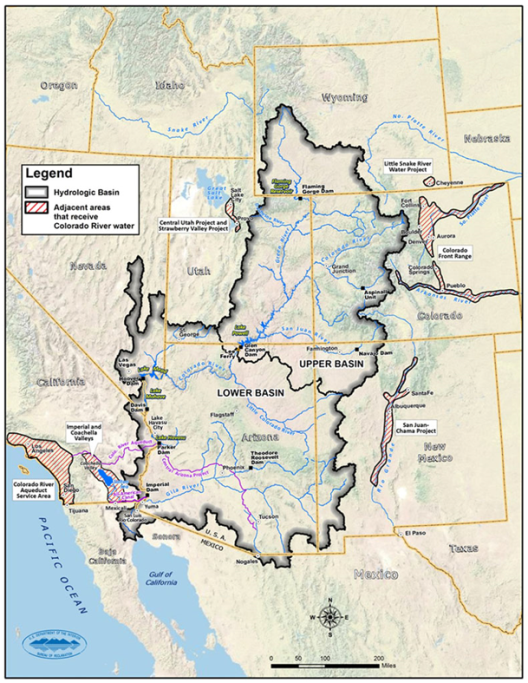
Figure 1. The Colorado River basin and U.S. areas that import Colorado River water.
Source: Bureau of Reclamation, Colorado River Basin Water Supply and Demand Study,
2012.
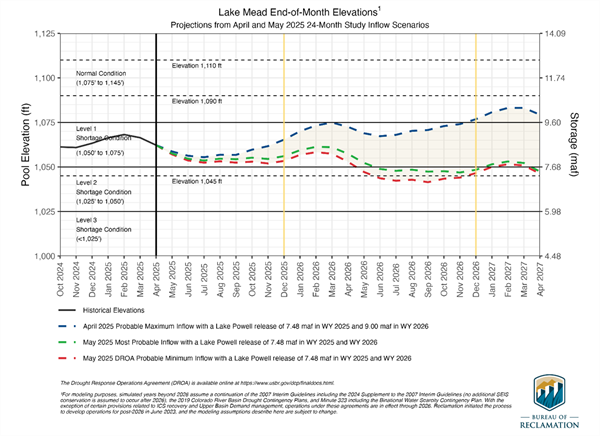
Figure 2. Lake Mead end-of-month elevations based on model projections from April and
May 2025, 24-Month study inflow scenarios.
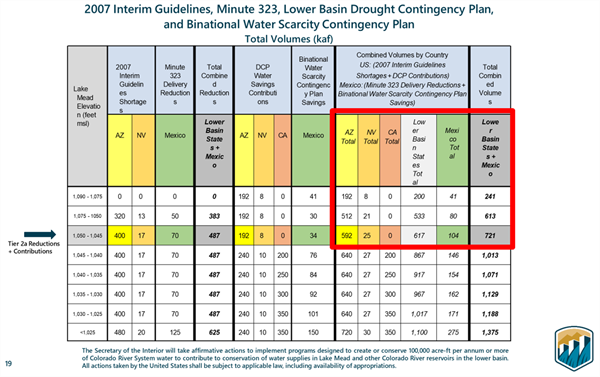
Figure 3. Tier 2a reductions based on the 2007 interim guidelines, Minute 323, lower
basin drought contingency plan, and binational water scarcity contingency plan.
Source: U.S. Bureau of Reclamation.
First, I want to thank everyone who participated in last week's Vegetable Pest Losses Survey.
This year's survey included the return of the lettuce disease losses section. While several diseases were present and managed last season, downy mildew accounted for the majority of disease management costs by a wide margin. This really underscores the
impact that last spring's unusually rainy weather had on disease development across the Yuma lettuce production region.
No one can predict exactly what this upcoming spring will bring, but there has been discussion about the possibility of a strong El Niño leading to an extended monsoon season. If that proves true, the conditions would once again support spring
downy mildew development. The pathogen only needs about 3 to 4 hours of continuous leaf wetness to infect lettuce, so periods of overnight moisture, prolonged morning dew, or frequent rainfall when inoculum (spores) are present increase disease risk.
With that in mind, this seems like a good opportunity to review what is known about downy mildew and discuss strategies for its management.
Resistance in lettuce to Bremia lactucae, the causal oomycete pathogen behind downy mildew, is inherited in a gene-for-gene fashion, meaning one major gene product in the plant host interacts with one major gene product in the pathogen. When
resistance is present, this leads to an incompatible interaction between plant and pathogen and results in complete immunity to infection. Resistance genes in these types of interactions most often encode a protein molecule that acts like a burglar
alarm. These molecular sensors in the host bind to proteins secreted specifically by the pathogen, and when that happens a storm of defense responses is activated in the plant that excludes further infection. This is not the only mode of genetic resistance
found in plants, but it is often the most drastic and effective against obligate parasites like downy mildew.
But this simple gene-for-gene interaction often puts incredible selection pressure on the pathogen populations to change such that they can get around the resistance. By losing the molecule that the plant detects in order to initiate a defense response,
the pathogen becomes unrecognizable to the resistance genes a plant variety may have. Just like spraying the same mode of action over and over again leads to a pest population developing resistance to a pesticide, the same selection applies to genetic
resistance. The longer a resistance gene is deployed in a region, the more likely the pathogen population is to change in response until that resistance gene is no longer effective at managing the disease.
One of the biggest challenges with lettuce downy mildew is that B. lactucae is constantly changing over time. It exists as many different races, where each race has a different reaction to the resistance genes bred into lettuce varieties. You
can think of these races as different versions of the same pathogen. A lettuce variety that resists one race may still be susceptible to another.
These races are identified by testing them against a panel of lettuce varieties with known resistance genes. In the western United States, races are named by the International Bremia Evaluation Board-U.S. (IBEB-US) and are given names with a number followed by the country’s abbreviation, such as 8US, 9US, or 10US. The populations found in the western U.S. are different from those found in Europe, so each region uses its own independent naming system.
The downy mildew population has changed considerably over time. Earlier races (1US through 4US) are now rarely found in commercial lettuce production. During the 2000s and 2010s, races 5US through 8US became the most common. Race 9US was recognized after being detected repeatedly between 2015 and 2017, and the newest officially recognized race, 10US, was designated in 2025. Below is a pie chart showing the relative frequency of the races identified from 114 Yuma County downy mildew samples between 2023-2024:

Figure 1: Pathotyping results of 114 lettuce samples from Yuma County collected between 2023 and 2024. Data source: https://bremia.ucdavis.edu/bremia_database_main.php
The results show that much of the downy mildew population found in Yuma County is made up of novel strains of Bremia lactucae that have not yet been officially classified as a race. An official race is only recognized after it has been shown to be stable and widespread over multiple locations and growing seasons. These newer strains may disappear over time, or they may eventually become established and earn an official race designation. In the meantime, this means growers and lettuce breeders in Yuma County are often dealing with strains that can dodge the resistance in some lettuce varieties before those strains are common enough to be officially recognized. It also highlights why relying on resistance alone is not enough to manage the disease.
Table 1: Pathotyping and fungicide sensitivity results of samples from Yuma County collected in 2025.

This trend appears to be continuing. All of the downy mildew samples sent for race testing last season were identified as novel strains rather than known, officially designated races.
It's impossible to predict exactly how these new strains will respond to the resistance genes found in today's commercial lettuce varieties. However, because they have not been previously characterized, they are more likely to overcome existing genetic
resistance than the races we already know about.
New strains develop naturally over time. They can arise when different strains exchange genetics (i.e. intermate) or through random mutations. When growers plant varieties with similar resistance packages over large areas, the pathogen population
is placed under strong selection pressure. Any strain that happens to acquire the ability to infect those resistant varieties gains a major advantage and gets to reproduce without competition where other strains cannot. Over just a few disease
cycles, those successful strains can become much more common in the population until they are the predominant strain overall.
An important point to remember is that the resistance bred into commercial lettuce varieties is not wearing out or becoming weaker over time. The genetics in the lettuce remain just as effective as when the variety was released. What changes is the
pathogen. As the downy mildew population evolves new strains emerge that can bypass resistance genes that previously worked very well.
That means that varieties carrying resistance to races 5US through 10US are still doing exactly what they were designed to do. They continue to suppress those known races and help prevent them from becoming widespread in commercial fields. So, if
you experience significant downy mildew in a field planted with a variety that has a strong resistance package, the culprit is most likely one of these newer, uncharacterized strains rather than a failure of the variety itself.
Unfortunately, Bremia lactucae can evolve much faster than scientists can identify new races and breeders can develop and release resistant varieties. That's why no resistance package should be viewed as a stand-alone solution.
This is also why extension, researchers, and the seed and crop protection industries place so much emphasis on the integrated pest management (IPM) concept. Genetic resistance is an essential tool, but it works best and remains the most sustainable when combined with other management practices. For novel strains that can slip past host resistance, timely fungicide applications and other disease management strategies become especially important for maintaining control.

Figure 2: Mean disease severity by treatment. Disease severity was determined by rating 10 plants within each of the five replicate plots per treatment using the following rating system: 0 = no downy mildew present; 1 = downy mildew present on bottom leaves of plant; 2 = downy mildew present on bottom leaves and lower wrapper leaves; 3 = downy mildew present on bottom leaves and all wrapper leaves; 4 = downy mildew present on bottom leaves, wrapper leaves, and cap leaf; 5 = downy mildew present on entire plant. Disease severity is displayed as the mean of five replicates across all three lettuce varieties and bars show a 95% confidence interval around the mean calculated from individual treatment data. Compact letter display (CLD) above boxes show significantly different treatments (Kruskal-Wallis ANOVA and Dunn’s test). Boxes sharing the same letter(s) are not significantly different from one another. Fb = “followed by” in the rotation. Not all products are registered yet for use in lettuce. The inclusion of specific fungicide products or formulations in these trials does not constitute an endorsement or recommendation over other labeled products.
The most effective way to manage lettuce downy mildew is to use an integrated approach. Plant varieties with a strong resistance package against races 5US through 10US, and pair that resistance with timely, full-label-rate fungicide applications when environmental conditions favor disease. This combination provides the broadest and most reliable protection against both known races and the novel strains that continue to emerge in Yuma County.
If you have any concerns regarding the health of your plants/crops please consider submitting samples to the Yuma Plant Health Clinic for diagnostic service or booking a field visit with me:
Christopher Detranaltes, Ph.D.
Cooperative Extension – Yuma County
Email: cdetranaltes@arizona.edu
Cell: 602-689-7328
6425 W 8th St Yuma, Arizona 85364 – Room 109I thought I’d change pace this week and take the opportunity to ask you, the readers of this newsletter, if there are any ag automation/mechanization topics you would be interested in hearing more about. I am happy to do some research and share the findings in future articles. Drop me a line at siemens@cals.arizona.edu or feel free to call me at 928.782.5869. I’d love to know your interests.

Fig. 1. Futuristic farming.
(Image credits: AgTech Media Group, Dover, DE)
According to some authors "the human brain can process images up to 60,000 times faster than words"1. So, I decided to share images of some of the onion herbicide tests we did at the Yuma Ag Center last season hoping you find them interesting as the season progresses. As you know the products tested could respond differently under different environments. Also some of these trials are done searching for new alternatives, therefore products are not registered.

Biological control is an important IPM tool globally. This pest suppression technique is especially important for managing pests in organic crop production. There are various biological control techniques, including conservation biological control, classical biological control, and augmentative biological control. Conservation biological control is the practice of providing habitat to support abundant populations of naturally occurring arthropods that attack crop pests. However, classical biological control and augmentative biological control involve the release of arthropod predators and parasitoids, usually non-native, into the field or greenhouses. This article focuses on conservation biological control.
The contribution of native beneficial insects to pest control has been estimated to be approximately $4.5 billion annually in the United States alone. However, the benefits of beneficial insects areoften overlooked. Research conducted across the country has shown evidence that conserving natural habitats leads to an increase in beneficial arthropod populations and a reduction in pest problems on farms. Beneficial arthropod predators and parasitoids often rely on natural or semi-natural areas adjacent to the field for their persistence. Between growing seasons, these natural and semi-natural areas provide alternative food sources, overwintering, and nesting habitats for natural enemies, thereby promoting their populations. To complete their life cycle, natural enemies require more than just prey or hosts; they also need refuge sites and alternative food sources.
Neighboring natural and semi-natural habitats serve as sources of natural enemies during the growing seasons to suppress crop pests. The establishment of wildflower margins around crop fields increases the abundance of beneficial insects that search for pollen and nectar. For example, many adult parasitoids sustain themselves with pollen and nectar from nearby flowering plants while searching for hosts. Most natural enemies do not disperse far from their overwintering sites; access to permanent habitat near or within the field gives them a jump-start on early pest populations.
Farms with diverse and dense populations of natural enemies are likely to exhibit the following characteristics:
- Have small fields surrounded by natural vegetation.
- Composed of diversified cropping systems and plant populations in or around fields include perennials and flowering plants.
- Crops are managed organically or with minimal agrichemicals.
- Soils are high in organic matter and biological activity and, during the off-season, covered with mulch or vegetation.

Figure 1. Syrphid fly feeding from sweet alyssum flowers.

Figure 2. Mix flowers planted on strips between rows of celery to provide food and
shelter for natural enemies.
Improving crop yields through sustainable practices remains a key goal for agricultural research, particularly in regions facing environmental constraints like desert conditions. Biostimulants, products known to enhance plant growth, nutrient uptake, and resilience against environmental stress, offer potential benefits for organic agriculture, especially when integrated with precision irrigation techniques. This study, conducted at the Yuma Agricultural Center (University of Arizona) during the Fall 2024–Spring 2025 growing seasons, evaluated the effects of biostimulant combined with sensor-based irrigation scheduling on iceberg lettuce production under organic and conventional systems. The experimental design included four treatments each for organic and conventional systems, which combined traditional irrigation, sensor-based irrigation, and biostimulant applications.
Results indicated clear distinctions between organic and conventional lettuce systems in response to biostimulant treatments. In organic fields, the integration of biostimulant with sensor-based irrigation (OSB) achieved the highest yield, approximately 16.7 tons per acre. This represented a 20% improvement over organic treatments without sensor-based scheduling (OTI and OTB, 13.9 tons per acre) and an 8.4% increase over sensor-based irrigation without biostimulant (OSI, 15.4 tons per acre). These yield differences highlight the synergistic effect of combining biostimulant with precise irrigation water management techniques in an organic lettuce production system, potentially due to enhanced soil nutrient availability, improved root growth, and optimized water uptake. Conversely, conventional treatments yielded consistently high production across all variations, averaging around 27 tons per acre, with no measurable yield enhancement from adding biostimulant. This may indicate that conventional systems already operating at optimal nutrient and irrigation levels have limited potential for further yield improvement through biostimulant use.
These findings emphasize that biostimulant suggestively enhanced yield in organic lettuce production only when combined with sensor-based irrigation management but offered negligible benefits under conventional farming conditions. The outcomes suggest potential economic and environmental benefits for organic producers adopting integrated management practices involving biostimulant and sensor-based irrigation. Figure 1 provides detailed comparisons of yields across treatments, emphasizing the advantage of coupling biostimulant with sensor-based irrigation in organic systems at the Yuma Agricultural Center.
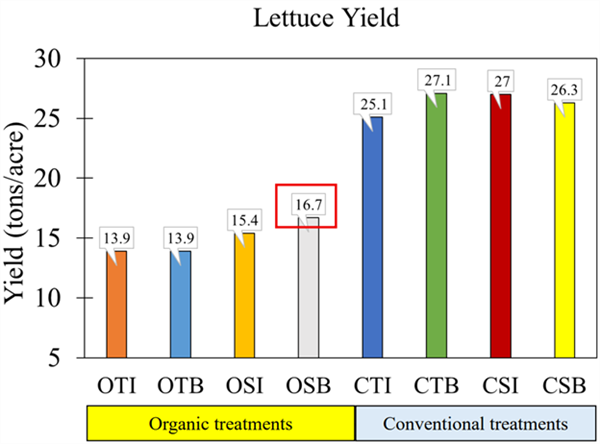
Figure 1. Lettuce yield: Organic Field: Organic sensor-based irrigation + biostimulant
(OSB), Organic traditional-based irrigation (OTI), Organic traditional-based irrigation +
biostimulant (OTB), and Organic sensor-based irrigation (OSI); Conventional Field:
Conventional sensor based irrigation + biostimulant (CSB), Conventional traditional-based
irrigation (CTI), Conventional traditional-based irrigation + biostimulant (CTB), and
Conventional sensor-based irrigation (CSI) at the Valley Research Center, University of
Arizona, Yuma Agricultural Center, Yuma, Arizona.
VegIPM Update Vol. 17, Num. 15
July 22, 2026
Results of trap catches below!!
Whitefly: Adult activity remains steady across locations; above average for this time of the year, especially high numbers seen in North Gila Valley. Historically, whitefly numbers peak in July.
Thrips: Adult thrips activity remained low over the last two weeks. About average for this time of the year. Historically, thrips numbers remain low until Sept-Oct.