In 2026 the 2007 Interim Guidelines for Lower Basin Shortages and the Coordinated Operations for both Lake Powell and Lake Mead are set to expire. The seven Colorado River Basin states and stakeholders must work together to develop the new criteria that will replace those guidelines. At present, there is a gridlock in those negotiations between the Upper and Lower Basin states and it must be resolved in 2025 to replace those guidelines expiring in 2026.
As part of the 2025 SW Ag Summit program that was conducted on Thursday, 20 February on the campus of Arizona Western College, two sessions, the morning keynote and a morning breakout session, addressed the future of the Colorado River and the next set of management plans for water allocations that will be very important for agriculture in the lower Colorado River Valley in the next decade.
We were very fortunate to have in both sessions Mr. Tom Buschatzke, Director for the Arizona Department of Water Resources, and Mr. J.B. Hamby, Commissioner for the Colorado River Board for the State of California. Mr. Bushatzke and Mr. Hamby both serve as the lead negotiators for the delegations representing Arizona and California in basin-wide negotiations on the development of the new operational guidelines for the management of the Colorado River.
In the breakout session, Mr. Bushatzke and Mr. Hamby were joined by Mr. Hank Auza, President of the Yuma County Water Users Association and Mr. Elston Grubaugh, General Manager for the Wellton-Mohawk Irrigation and Drainage District. Hank and Elston provided valuable insight on the operational plans and potential impacts on their districts that have different priority levels for Colorado River water allocations.
The discussions in both the keynote and breakout sessions were very direct, candid, and forthright. Mr. Buschatzke and Mr. Hamby both provided very thorough and informative descriptions of how the negotiation teams are structured, their function, and how the negotiations have been proceeding.
In my opening presentation of the keynote program, I described my impressions from a remote position, not being directly involved in any manner in the negotiations, that two basic schools of thought seem to have developed and appear to be dominant in the current negotiation impasse. The first apparent school of thought in the development of the new guidelines is to follow the law, specifically the Law of the River. The other school of thought is to essentially tear up the existing set of agreements, burn it all down – so to speak, and start over completely. It seems that these two schools of thought are generally held by the lower and upper basins, respectively. Tom Buschatzke offered a third possibility that could develop as a hybrid plan between the two.
Hank Auza and Elston Grubaugh provided valuable perspectives as Colorado River water users working with varying levels of legal priority for water allocations. They and their colleagues working in the various irrigation districts of the lower Colorado River Valley have a lot at stake with these negotiations and the future health of the river. Their input was also very direct, complete, and forthright. Their experience and point of view brought a lot of valuable information to these discussions for the benefit of everyone present and participating.
Collectively, both the keynote and breakout sessions dealing with the future of the Colorado River were very well delivered by Tom Buschatzke, J.B. Hamby, Hank Auza, and Elston Grubaugh. Their hard work and commitment to the good stewardship of Colorado River water resources is clear and we are very fortunate to have them each committing their time and expertise to these issues.First, I want to thank everyone who participated in last week's Vegetable Pest Losses Survey.
This year's survey included the return of the lettuce disease losses section. While several diseases were present and managed last season, downy mildew accounted for the majority of disease management costs by a wide margin. This really underscores the
impact that last spring's unusually rainy weather had on disease development across the Yuma lettuce production region.
No one can predict exactly what this upcoming spring will bring, but there has been discussion about the possibility of a strong El Niño leading to an extended monsoon season. If that proves true, the conditions would once again support spring
downy mildew development. The pathogen only needs about 3 to 4 hours of continuous leaf wetness to infect lettuce, so periods of overnight moisture, prolonged morning dew, or frequent rainfall when inoculum (spores) are present increase disease risk.
With that in mind, this seems like a good opportunity to review what is known about downy mildew and discuss strategies for its management.
Resistance in lettuce to Bremia lactucae, the causal oomycete pathogen behind downy mildew, is inherited in a gene-for-gene fashion, meaning one major gene product in the plant host interacts with one major gene product in the pathogen. When
resistance is present, this leads to an incompatible interaction between plant and pathogen and results in complete immunity to infection. Resistance genes in these types of interactions most often encode a protein molecule that acts like a burglar
alarm. These molecular sensors in the host bind to proteins secreted specifically by the pathogen, and when that happens a storm of defense responses is activated in the plant that excludes further infection. This is not the only mode of genetic resistance
found in plants, but it is often the most drastic and effective against obligate parasites like downy mildew.
But this simple gene-for-gene interaction often puts incredible selection pressure on the pathogen populations to change such that they can get around the resistance. By losing the molecule that the plant detects in order to initiate a defense response,
the pathogen becomes unrecognizable to the resistance genes a plant variety may have. Just like spraying the same mode of action over and over again leads to a pest population developing resistance to a pesticide, the same selection applies to genetic
resistance. The longer a resistance gene is deployed in a region, the more likely the pathogen population is to change in response until that resistance gene is no longer effective at managing the disease.
One of the biggest challenges with lettuce downy mildew is that B. lactucae is constantly changing over time. It exists as many different races, where each race has a different reaction to the resistance genes bred into lettuce varieties. You
can think of these races as different versions of the same pathogen. A lettuce variety that resists one race may still be susceptible to another.
These races are identified by testing them against a panel of lettuce varieties with known resistance genes. In the western United States, races are named by the International Bremia Evaluation Board-U.S. (IBEB-US) and are given names with a number followed by the country’s abbreviation, such as 8US, 9US, or 10US. The populations found in the western U.S. are different from those found in Europe, so each region uses its own independent naming system.
The downy mildew population has changed considerably over time. Earlier races (1US through 4US) are now rarely found in commercial lettuce production. During the 2000s and 2010s, races 5US through 8US became the most common. Race 9US was recognized after being detected repeatedly between 2015 and 2017, and the newest officially recognized race, 10US, was designated in 2025. Below is a pie chart showing the relative frequency of the races identified from 114 Yuma County downy mildew samples between 2023-2024:

Figure 1: Pathotyping results of 114 lettuce samples from Yuma County collected between 2023 and 2024. Data source: https://bremia.ucdavis.edu/bremia_database_main.php
The results show that much of the downy mildew population found in Yuma County is made up of novel strains of Bremia lactucae that have not yet been officially classified as a race. An official race is only recognized after it has been shown to be stable and widespread over multiple locations and growing seasons. These newer strains may disappear over time, or they may eventually become established and earn an official race designation. In the meantime, this means growers and lettuce breeders in Yuma County are often dealing with strains that can dodge the resistance in some lettuce varieties before those strains are common enough to be officially recognized. It also highlights why relying on resistance alone is not enough to manage the disease.
Table 1: Pathotyping and fungicide sensitivity results of samples from Yuma County collected in 2025.

This trend appears to be continuing. All of the downy mildew samples sent for race testing last season were identified as novel strains rather than known, officially designated races.
It's impossible to predict exactly how these new strains will respond to the resistance genes found in today's commercial lettuce varieties. However, because they have not been previously characterized, they are more likely to overcome existing genetic
resistance than the races we already know about.
New strains develop naturally over time. They can arise when different strains exchange genetics (i.e. intermate) or through random mutations. When growers plant varieties with similar resistance packages over large areas, the pathogen population
is placed under strong selection pressure. Any strain that happens to acquire the ability to infect those resistant varieties gains a major advantage and gets to reproduce without competition where other strains cannot. Over just a few disease
cycles, those successful strains can become much more common in the population until they are the predominant strain overall.
An important point to remember is that the resistance bred into commercial lettuce varieties is not wearing out or becoming weaker over time. The genetics in the lettuce remain just as effective as when the variety was released. What changes is the
pathogen. As the downy mildew population evolves new strains emerge that can bypass resistance genes that previously worked very well.
That means that varieties carrying resistance to races 5US through 10US are still doing exactly what they were designed to do. They continue to suppress those known races and help prevent them from becoming widespread in commercial fields. So, if
you experience significant downy mildew in a field planted with a variety that has a strong resistance package, the culprit is most likely one of these newer, uncharacterized strains rather than a failure of the variety itself.
Unfortunately, Bremia lactucae can evolve much faster than scientists can identify new races and breeders can develop and release resistant varieties. That's why no resistance package should be viewed as a stand-alone solution.
This is also why extension, researchers, and the seed and crop protection industries place so much emphasis on the integrated pest management (IPM) concept. Genetic resistance is an essential tool, but it works best and remains the most sustainable when combined with other management practices. For novel strains that can slip past host resistance, timely fungicide applications and other disease management strategies become especially important for maintaining control.

Figure 2: Mean disease severity by treatment. Disease severity was determined by rating 10 plants within each of the five replicate plots per treatment using the following rating system: 0 = no downy mildew present; 1 = downy mildew present on bottom leaves of plant; 2 = downy mildew present on bottom leaves and lower wrapper leaves; 3 = downy mildew present on bottom leaves and all wrapper leaves; 4 = downy mildew present on bottom leaves, wrapper leaves, and cap leaf; 5 = downy mildew present on entire plant. Disease severity is displayed as the mean of five replicates across all three lettuce varieties and bars show a 95% confidence interval around the mean calculated from individual treatment data. Compact letter display (CLD) above boxes show significantly different treatments (Kruskal-Wallis ANOVA and Dunn’s test). Boxes sharing the same letter(s) are not significantly different from one another. Fb = “followed by” in the rotation. Not all products are registered yet for use in lettuce. The inclusion of specific fungicide products or formulations in these trials does not constitute an endorsement or recommendation over other labeled products.
The most effective way to manage lettuce downy mildew is to use an integrated approach. Plant varieties with a strong resistance package against races 5US through 10US, and pair that resistance with timely, full-label-rate fungicide applications when environmental conditions favor disease. This combination provides the broadest and most reliable protection against both known races and the novel strains that continue to emerge in Yuma County.
If you have any concerns regarding the health of your plants/crops please consider submitting samples to the Yuma Plant Health Clinic for diagnostic service or booking a field visit with me:
Christopher Detranaltes, Ph.D.
Cooperative Extension – Yuma County
Email: cdetranaltes@arizona.edu
Cell: 602-689-7328
6425 W 8th St Yuma, Arizona 85364 – Room 109New automated/robotic ag technologies are coming out all the time. Ever wonder how they function in the “real world” and whether they are cost effective? Western Growers recently released a case study report on the economic impact of Carbon Robotics LaserWeeder on overall weeding costs. The study tracked expenses, productivity, and labor savings of the machine operating over one year on several thousand acres at two commercial farms, Braga Fresh and Triangle Farms. It is a well done, detailed study enriched by insightful comments and practical recommendations made by the farm managers responsible for machine operations. It’s an easy read and well worth the time for those interested in the economic and overall feasibility of laser weeding. Check it out hereby clicking the image below. I don’t want to be a spoiler, but I was surprised to learn that despite the initial high cost of the laser weeder ($1.2 million), overall weeding costs at both farms were reduced by about 40% (>$250/acre) in high-density organic crops such as spring mix and spinach.
Stay tuned. Western Growers plans to release five more automation technology case study reports within the next year. Upcoming reports include grower case studies experiences with automated weeding machines from Stout Industrial Technology, Inc. and Ecorobotix; and with autonomous ag platforms from Burro, GUSS Automation, and Bluewhite.

Fig. 1. Western Growers case study report on the economic impact of Carbon
Robotics laser weeding machine on weeding costs at two commercial leafy
green vegetable farms. Click here or on the figure to view. (Photo credit: The
Western Growers Center for Innovation & Technology)
In a letter from the EPA to AMVAC dated May 2, 2024 that you can find by clicking here: https://www.regulations.gov/document/EPA-HQ-OPP-2011-0374-0116 EPA "thanks AMVAC for voluntarily proposing to discontinue DCPA use on onions".
If DCPA is not available next season our options for onion weed control are reduced. Please read the work from Carl Bell https://escholarship.org/content/qt91w4d06x/qt91w4d06x.pdf?t=lnryxp&v=lg regarding combining bensulide and pendimethalin for weeds control in onions. He did this research due to a similar situation with Dacthal in 1996.
We tested last season 2 qts of Prefar and 0.5 pt of Prowl and the weed control looked promising. There appears to be a synergystic effect between these products. Some phytotoxicity was observed and stand was affected. Bell reported (2001) that "a reduced crop stand does not always equal a reduced yield, since onions compensate to some extent by producing larger bulbs".
Some PCAs are planning IPM strategies and are suggesting for green onions: "Apply Goal early post emergence with clethodim if you have grasses then Prowl at layby".
What do you think? keep sending your comments to the Veg IPM Team and let us know what you think.

Included below is a list of organic insecticides that you can consider for your organic IPM programs. Although there are few alternative organic insecticide options, it is important to rotate when possible. Like conventional insecticides, continuous exposure to the same biopesticides may pose some risk of further reducing their efficacy and leading to the development of resistance.
A good organic insecticide rotation practice is to alternate selective organic insecticides with broad-spectrum organic insecticides. The use of selective organic insecticides favors the increase of beneficial arthropod populations which may help to keep the pest population in check and delay repeated application of insecticides. When the population of lepidopteran pests is low, spraying Bt-based insecticides first and pyrethrin or Spinosad-based products thereafter is a good strategy. Proper insecticide rotation is important because it can help reduce insecticide application frequency, resulting in reduced crop production costs.
Tank-mixing can help improve the efficacy of some organic insecticides against some target pests. Tank-mixing a Bt insecticide with pyrethrin, such as Xentari + Pyganic or Dipel + Pyganic, can be an effective combination for controlling lepidopteran larvae. Additionally, combining Pyganic and a neem-based insecticide like Aza-Direct can be a favorable combination for small lepidopteran larvae. Tank-mixing Entrust (spinosad) and M-Pede can help suppress flea beetles and bagrada bugs.

In regions like Yuma, AZ, extensive farming practices, irrigation and nitrogen (N) fertilizer management should be considered simultaneously due to the important fact that N moves in the soil with water and both variables should be managed together to enhance production efficiency. Coupled irrigation and N management strategies with the efficient irrigation method can lead to a critical approach to increase irrigation and nitrogen use efficiency (NUE) while maintaining crop yield and soil productivity and minimizing the potential for N leaching or losing. The mass of leached N during the growing season may be reduced by improved irrigation efficiency that can reduce drainage volume. For example, the surface/furrow irrigation system has greater irrigation depths and lower NUE than sprinkler irrigation systems. Moreover, the methodology of N application through split/timing applications can increase the NUE, especially when utilizing micro-irrigation and sprinkler irrigation systems. One of the primary objectives of the irrigation systems is to maximize the water storage in the root zone through uniform irrigation application and distribution and in the meantime to minimize water losses through deep percolation and surface run-off. In addition, irrigation systems have been utilized to apply fertilizers (fertigation) throughout the season. Generally, these systems provide a way to supply adequate N (allows small dosage application) to the crop in-season and those systems can deliver the desired nutrition amount to the crop at any crop stage with a high efficiency and distribution uniformity. In other words, a given irrigation system has the potential to reduce the fertilizer inputs and the production costs, reduce foliar disease, and minimize leaf wetness as well as reduce the weeds.
The three most commonly used irrigation methods/systems are (i) surface (gravity), (ii) sprinkler (including center pivot), and (iii) micro-irrigation. For each of the methods, there a different management processes and the uniformity of water applications as well as infiltration dynamics, which influence the efficiency of the system as well as the efficiency of N applications. Worldwide, low NUE is one of the most important challenges for researchers, farmers, and agencies, and it is on average quite low in both organic and conventional agricultural systems, including in developed nations. It is reported that globally, pre-plant N is most commonly applied, which may lead to poor synchrony between N and crop demand, contributing to low NUE. Applying N at a uniform rate is another factor of low NUE, because the available N level for crop uptake may vary between the fields and within a given field due to the spatial variability in soil characteristics and temporal characteristics due to environmental factors.
Timing nitrogen applications for lettuce is key to maximizing nutrient management efficiency, though it can be challenging if growers are constrained by time. To minimize nutrient loss, it's best to avoid pre-plant nitrogen applications, especially in the fall. At planting, apply a starter fertilizer, positioning it below and to the side of the seed row. The first sidedress application should occur after thinning at the 2-4 leaf stage, but only if soil nitrate-nitrogen is below the critical level. A second application is recommended a few weeks later at the cupping stage, contingent on soil nitrate levels. These applications should be carefully timed and adapted based on soil conditions to ensure effectiveness. Aligning nitrogen applications with the crop’s demand not only enhances nitrogen use efficiency but also helps in managing tight schedules, reduces environmental impacts, and optimizes lettuce yield and quality (Figure 1).
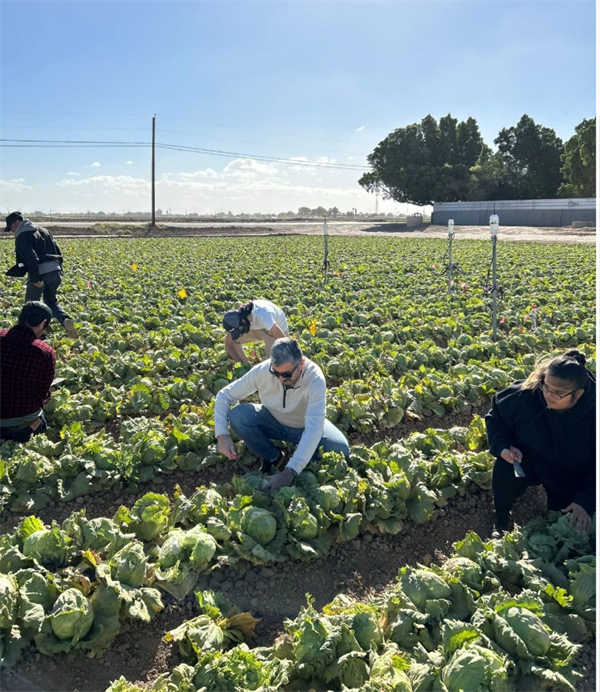
Figure 1: Harvesting in the Organic/Conventional Lettuce Production Field at the Valley
Research Center, University of Arizona Yuma Agricultural Center, Yuma, Arizona.
VegIPM Update Vol. 17, Num. 15
July 22, 2026
Results of trap catches below!!
Whitefly: Adult activity remains steady across locations; above average for this time of the year, especially high numbers seen in North Gila Valley. Historically, whitefly numbers peak in July.
Thrips: Adult thrips activity remained low over the last two weeks. About average for this time of the year. Historically, thrips numbers remain low until Sept-Oct.