Nutrient Mobility Concept
In a recent article published in this newsletter on 27 November 2024, Volume 15, No. 24, I presented an article addressing soil health and the Bray Nutrient Mobility Concept in relation to mobile nutrients (Silvertooth, 2024). In this article, the concept of nutrient behavior in soil-plant systems focuses on the immobile plant nutrients.
Plant nutrient management is strongly dependent on nutrient mobility in the soil. Nutrient mobility in the soil is different among the essential plant nutrients and nutrient management in the field needs to take this into account.
In 1954, Dr. Roger H. Bray at the University of Illinois proposed a nutrient mobility concept that has proven to be very important in the management of nutrients for optimum efficiency (agronomically, economically, and environmentally). Bray essentially simplified all soil nutrient chemistry to the fact that some plant nutrients are mobile in the soil and some are not. (Bray, 1954; Raun, 2017; Warren et al., 2017, Havlin et al. 2014; Troeh and Thompson, 2005).
Mobile Nutrients and the Root System Sorption Zone
Mobile plant nutrients in the soil move with the soil water. Thus, plants can extract mobile nutrients from a large volume of soil beyond the direct root system. Accordingly, plants take up mobile nutrients from a “root system sorption zone” (Figure 1). This gives plants the capacity to utilize most of the mobile nutrients in the root system sorption zone as those nutrients will move to the plant roots with the soil water as it is taken up by the plant (Silvertooth, 2024).
We consider the mobile plant nutrients to be nitrogen (N), sulfur (S), boron (B), and chlorine (Cl). These mobile plant nutrients are taken up by the plant in the following forms: nitrate-nitrogen (NO3--N), sulfate-sulfur (SO42- - S), boric acid (H3BO3) and borate ions (BO33- - B), and chlorine is taken up as the chloride ion (Cl-).

Figure 1. The root system sorption zone and an illustration of the large volume of soil
from which plants extract mobile nutrients.
In a crop field where many plants are growing together, there are commonly root system sorption zones commonly overlap. Therefore, the root system sorption zones for adjoining plants are competing for water and mobile nutrients, (Figure 2). This is one of the main reasons that appropriate plant populations are important for optimum yield.
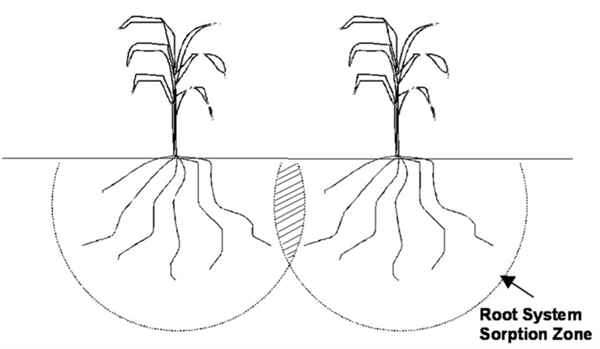
Figure 2. Competition among plants brought about by increasing yield goal.
Immobile Nutrients
Plant nutrients that are immobile in the soil include phosphorus(P), potassium (K), calcium (Ca), magnesium (Mg), iron (Fe), zinc (Zn), manganese (Mn), copper (Cu), and molybdenum (Mo). Immobile nutrients do not move as freely in the soil solution as the mobile nutrients do. These nutrients interact more directly with soil colloids and root surfaces.
Immobile nutrients are absorbed by the plant from the soil and soil solution that is directly next to the root surface. Plant roots must grow through the soil volume to come into direct contact with the immobile nutrients.
Thus, only a small volume of soil and soil solution that immediately adjacent to the root surface will be involved in providing immobile nutrients to the plant. Figure 3 describes this soil volume and plant root interface as the root surface sorption zone.

Figure 3. The root surface sorption zone and an illustration of the small volume of soil
from which plants extract immobile nutrients.
In the case of immobile nutrients, the entire soil volume is not as important as the soil colloid surfaces and soil solution next to the root surface. The concentration of immobile nutrients on the soil colloids immediately next to the root surface is a critical of the root system sorption zone.
Since only a thin layer of soil surrounding and in direct contact with the plant roots are involved in supplying immobile nutrients to the plant, there is little or no competition among plants for immobile nutrients. Competition among plants only occurs at points where roots from adjacent plants come in direct contact with one another (Figure 4).
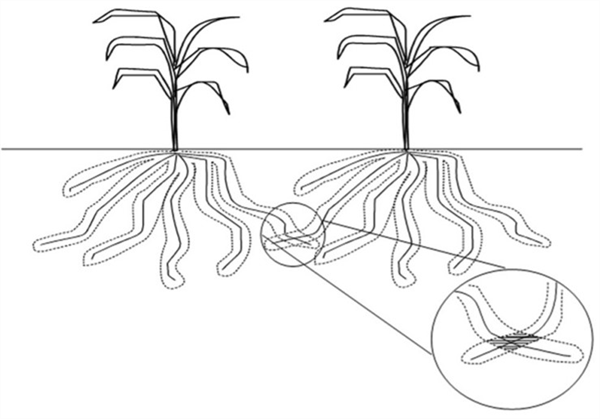
Figure 4. Limited competition among plants for immobile nutrients.
Due to this manner of immobile nutrient behavior and interaction with plant roots, the supply or concentration of immobile nutrients such as phosphorus (P) or potassium (K), is not dependent on a yield goal. In the case of immobile nutrients, the overall soil concentration of the immobile nutrients is most important, and these nutrients are not moving readily with soil water. If the immobile nutrient supply in the soil is adequate for optimum yield of a crop, the healthy plant root system can explore new soil volume and extract the nutrient sufficiently, such as phosphorus (P) or potassium (K).
The nutrient mobility concept and these basic illustrations can help us understand the basis for some common observations and resultant crop management practices. Fertilizers with immobile plant nutrients are more effective when they are incorporated into soil and particularly in soil zones where there is a high probability of plant roots encountering the immobile nutrients.
Banded applications of immobile nutrients are generally more effective than the same rates broadcast and incorporated into the soil. In contrast, mobile nutrients like nitrogen (N) can be broadcast and moved into the root system sorption zone by water.
Soil tests for immobile nutrients do not normally change much from year to year and this is true irrespective of the crop yields from the previous season or fertilizer rate. This is because most of soil volume was not in direct contact with the plant roots. Soil concentrations of immobile nutrients do not usually change rapidly but they can be slowly mined out of the soil by a series of crops without proper fertilization.
Continued or over-applications of immobile nutrient fertilizers, such as phosphorus (P), will cause a buildup of that nutrient in the soil. This is because only a small fraction (commonly 15-20% for most crops) of the nutrient or fertilizer comes into direct contact with the plant roots. The remaining amount of fertilizer interacts with the soil.
Appropriate soil tests that are properly correlated and calibrated with crop-specific response categories are important in evaluating immobile plant nutrient status. Immobile nutrient levels in the soil are commonly expressed in terms of percent sufficiency to produce a specific crop based on appropriate soil test results.
Our goal in plant nutrition management is to achieve the highest levels of efficiency (agronomically, economically, and environmentally) in the field as possible
References:
Bray, R.H.1954. A Nutrient Mobility Concept of soil-plant relationships. Soil Sci. 78(1), p. 9-22.
Havlin, J.L., Beaton, J.D., Tisdale, S.L. and Nelson, W.L. 2014. Soil Fertility and Fertilizers; An Introduction to Nutrient Management. 6th Edition, Prentice Hall, Upper Saddle River, NJ.
Silvertooth, J.C. 2024. Soil Health - Bray’s Nutrient Mobility Concept and Mobile Plant Nutrients University of Arizona Vegetable IPM Newsletter, Volume 15, No. 24,
Raun, W.R. 2017. In: Warren et al. 2017. Oklahoma Soil Fertility Handbook, Id:E-1039
Troeh, F.R. and Thompson, L.M. (2005) Soils and Soil Fertility. Sixth Edition, Blackwell, Ames, Iowa, 489.
Warren, J., H. Zhang, B. Arnall, J. Bushong, B. Raun, C. Penn, and J. Abit. 2017. Oklahoma Soil Fertility Handbook. Id: E-1039
Weil, R.R. and Brady, N.C. (2017) The Nature and Properties of Soils. 15th Edition, Pearson, New York.
First, I want to thank everyone who participated in last week's Vegetable Pest Losses Survey.
This year's survey included the return of the lettuce disease losses section. While several diseases were present and managed last season, downy mildew accounted for the majority of disease management costs by a wide margin. This really underscores the
impact that last spring's unusually rainy weather had on disease development across the Yuma lettuce production region.
No one can predict exactly what this upcoming spring will bring, but there has been discussion about the possibility of a strong El Niño leading to an extended monsoon season. If that proves true, the conditions would once again support spring
downy mildew development. The pathogen only needs about 3 to 4 hours of continuous leaf wetness to infect lettuce, so periods of overnight moisture, prolonged morning dew, or frequent rainfall when inoculum (spores) are present increase disease risk.
With that in mind, this seems like a good opportunity to review what is known about downy mildew and discuss strategies for its management.
Resistance in lettuce to Bremia lactucae, the causal oomycete pathogen behind downy mildew, is inherited in a gene-for-gene fashion, meaning one major gene product in the plant host interacts with one major gene product in the pathogen. When
resistance is present, this leads to an incompatible interaction between plant and pathogen and results in complete immunity to infection. Resistance genes in these types of interactions most often encode a protein molecule that acts like a burglar
alarm. These molecular sensors in the host bind to proteins secreted specifically by the pathogen, and when that happens a storm of defense responses is activated in the plant that excludes further infection. This is not the only mode of genetic resistance
found in plants, but it is often the most drastic and effective against obligate parasites like downy mildew.
But this simple gene-for-gene interaction often puts incredible selection pressure on the pathogen populations to change such that they can get around the resistance. By losing the molecule that the plant detects in order to initiate a defense response,
the pathogen becomes unrecognizable to the resistance genes a plant variety may have. Just like spraying the same mode of action over and over again leads to a pest population developing resistance to a pesticide, the same selection applies to genetic
resistance. The longer a resistance gene is deployed in a region, the more likely the pathogen population is to change in response until that resistance gene is no longer effective at managing the disease.
One of the biggest challenges with lettuce downy mildew is that B. lactucae is constantly changing over time. It exists as many different races, where each race has a different reaction to the resistance genes bred into lettuce varieties. You
can think of these races as different versions of the same pathogen. A lettuce variety that resists one race may still be susceptible to another.
These races are identified by testing them against a panel of lettuce varieties with known resistance genes. In the western United States, races are named by the International Bremia Evaluation Board-U.S. (IBEB-US) and are given names with a number followed by the country’s abbreviation, such as 8US, 9US, or 10US. The populations found in the western U.S. are different from those found in Europe, so each region uses its own independent naming system.
The downy mildew population has changed considerably over time. Earlier races (1US through 4US) are now rarely found in commercial lettuce production. During the 2000s and 2010s, races 5US through 8US became the most common. Race 9US was recognized after being detected repeatedly between 2015 and 2017, and the newest officially recognized race, 10US, was designated in 2025. Below is a pie chart showing the relative frequency of the races identified from 114 Yuma County downy mildew samples between 2023-2024:

Figure 1: Pathotyping results of 114 lettuce samples from Yuma County collected between 2023 and 2024. Data source: https://bremia.ucdavis.edu/bremia_database_main.php
The results show that much of the downy mildew population found in Yuma County is made up of novel strains of Bremia lactucae that have not yet been officially classified as a race. An official race is only recognized after it has been shown to be stable and widespread over multiple locations and growing seasons. These newer strains may disappear over time, or they may eventually become established and earn an official race designation. In the meantime, this means growers and lettuce breeders in Yuma County are often dealing with strains that can dodge the resistance in some lettuce varieties before those strains are common enough to be officially recognized. It also highlights why relying on resistance alone is not enough to manage the disease.
Table 1: Pathotyping and fungicide sensitivity results of samples from Yuma County collected in 2025.

This trend appears to be continuing. All of the downy mildew samples sent for race testing last season were identified as novel strains rather than known, officially designated races.
It's impossible to predict exactly how these new strains will respond to the resistance genes found in today's commercial lettuce varieties. However, because they have not been previously characterized, they are more likely to overcome existing genetic
resistance than the races we already know about.
New strains develop naturally over time. They can arise when different strains exchange genetics (i.e. intermate) or through random mutations. When growers plant varieties with similar resistance packages over large areas, the pathogen population
is placed under strong selection pressure. Any strain that happens to acquire the ability to infect those resistant varieties gains a major advantage and gets to reproduce without competition where other strains cannot. Over just a few disease
cycles, those successful strains can become much more common in the population until they are the predominant strain overall.
An important point to remember is that the resistance bred into commercial lettuce varieties is not wearing out or becoming weaker over time. The genetics in the lettuce remain just as effective as when the variety was released. What changes is the
pathogen. As the downy mildew population evolves new strains emerge that can bypass resistance genes that previously worked very well.
That means that varieties carrying resistance to races 5US through 10US are still doing exactly what they were designed to do. They continue to suppress those known races and help prevent them from becoming widespread in commercial fields. So, if
you experience significant downy mildew in a field planted with a variety that has a strong resistance package, the culprit is most likely one of these newer, uncharacterized strains rather than a failure of the variety itself.
Unfortunately, Bremia lactucae can evolve much faster than scientists can identify new races and breeders can develop and release resistant varieties. That's why no resistance package should be viewed as a stand-alone solution.
This is also why extension, researchers, and the seed and crop protection industries place so much emphasis on the integrated pest management (IPM) concept. Genetic resistance is an essential tool, but it works best and remains the most sustainable when combined with other management practices. For novel strains that can slip past host resistance, timely fungicide applications and other disease management strategies become especially important for maintaining control.

Figure 2: Mean disease severity by treatment. Disease severity was determined by rating 10 plants within each of the five replicate plots per treatment using the following rating system: 0 = no downy mildew present; 1 = downy mildew present on bottom leaves of plant; 2 = downy mildew present on bottom leaves and lower wrapper leaves; 3 = downy mildew present on bottom leaves and all wrapper leaves; 4 = downy mildew present on bottom leaves, wrapper leaves, and cap leaf; 5 = downy mildew present on entire plant. Disease severity is displayed as the mean of five replicates across all three lettuce varieties and bars show a 95% confidence interval around the mean calculated from individual treatment data. Compact letter display (CLD) above boxes show significantly different treatments (Kruskal-Wallis ANOVA and Dunn’s test). Boxes sharing the same letter(s) are not significantly different from one another. Fb = “followed by” in the rotation. Not all products are registered yet for use in lettuce. The inclusion of specific fungicide products or formulations in these trials does not constitute an endorsement or recommendation over other labeled products.
The most effective way to manage lettuce downy mildew is to use an integrated approach. Plant varieties with a strong resistance package against races 5US through 10US, and pair that resistance with timely, full-label-rate fungicide applications when environmental conditions favor disease. This combination provides the broadest and most reliable protection against both known races and the novel strains that continue to emerge in Yuma County.
If you have any concerns regarding the health of your plants/crops please consider submitting samples to the Yuma Plant Health Clinic for diagnostic service or booking a field visit with me:
Christopher Detranaltes, Ph.D.
Cooperative Extension – Yuma County
Email: cdetranaltes@arizona.edu
Cell: 602-689-7328
6425 W 8th St Yuma, Arizona 85364 – Room 109Keeping up to date with the latest developments in automated weeding machines is challenging. It’s a very fast-moving space with significant private and public investment. At the 2024 Southwest Ag Summit “Ag Tech: Innovations in Weed Control Technologies” breakout session, university experts and cutting-edge innovators will provide updates on laser weeding, high precision smart spot sprayers, robotic/automated weeders and band steam (agenda below).The session will be held TOMMOROW Thursday, February 22nd from 1:30-3:30 pm at Arizona Western College in Yuma, AZ.
As I mentioned in the last newsletter, there will also be a Field Demo where several of these technologies and other state-of-the-art automated weeders will be demonstrated operating in the field. The Field Demo is scheduled for TODAY, Wednesday, February 21st. Breakfast will be served at 7:00 am and demonstrations begin at 8:00 am. The event will also be held at AWC.
We will also have our 3rd generation prototype steam soil disinfestation machine on display at the event (Fig. 3). It is a self-propelled machine designed for commercial field scale operations. The device injects steam into the soil prior to planting to raise soil temperatures to levels sufficient to kill soilborne pathogens and weed seed (typically 140 °F > 20 minutes). We have had very good results with our previous prototypes and would like to demonstrate soil steaming to interested growers next season with the new machine. In addition to obtaining grower feedback on the viability of soil steaming, a second objective is to validate our small plot research results at the field scale level. If you are interested in the technique and would like a demo on your farm, please let me know. I would be happy to collaborate with you.
For more information about the Southwest Ag Summit, visit https://yumafreshveg.com/southwest-ag-summit/.
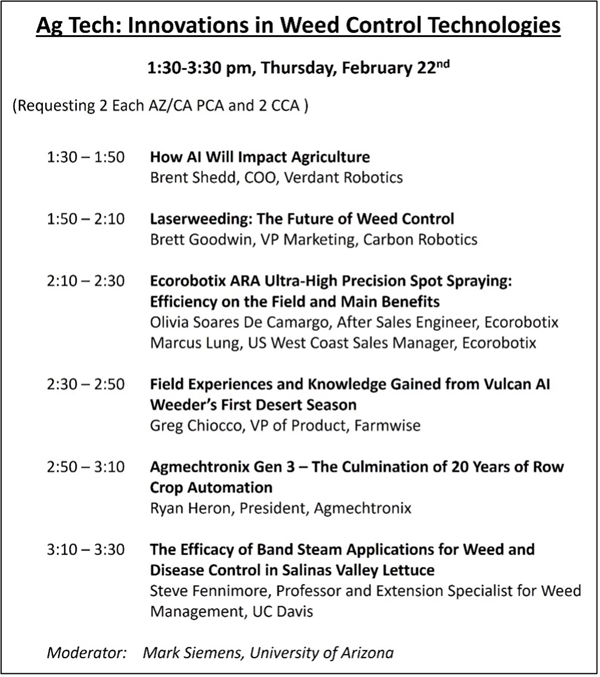
Fig. 1. Agenda for the “Ag Tech: Innovations in Weed Control Technologies”
educational session at the 2024 Southwest Ag Summit. The session will be held
Thursday, February 22nd at Arizona Western College, Yuma, AZ.
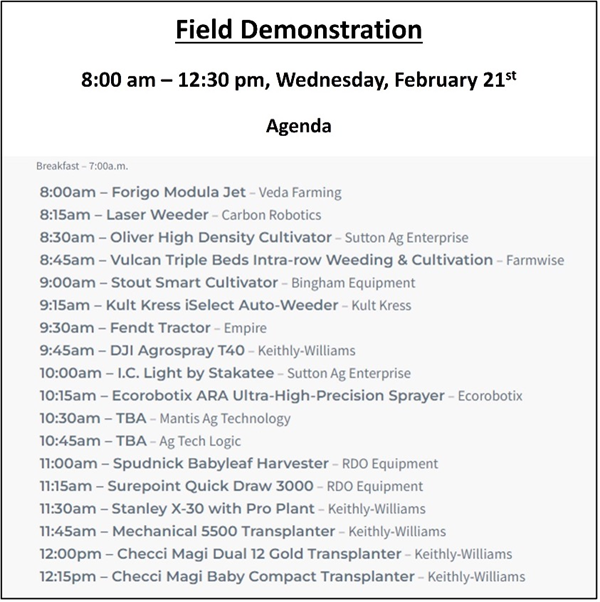
Fig. 2. 2024 Southwest Ag Summit Field Demo agenda. The event will
be held at Arizona Western College in Yuma, AZ.
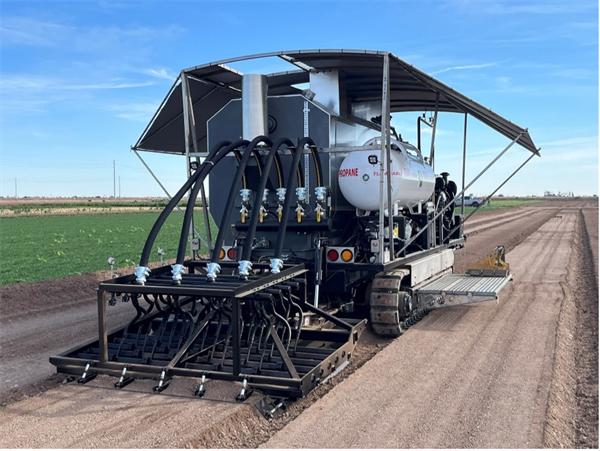
Fig. 3. Self-propelled machine designed for injecting steam into the
soil prior to planting to raise soil temperatures to sufficient levels to
control soilborne pathogens and weed seed. Unit will be on display at
the 2024 Southwest Ag Summit, Yuma, AZ. (Photo credit: Peter de
Groot).
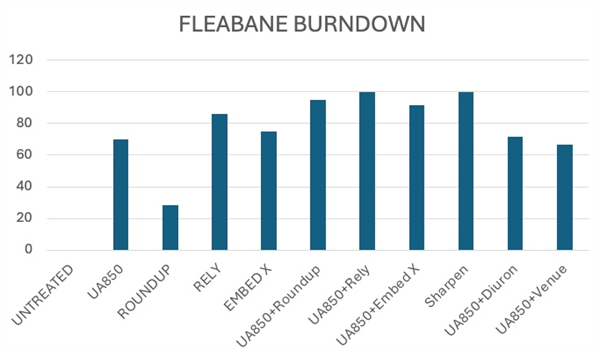
We are currently doing a trial for Hairy Feeabane control (Conyza bonariensis) with several combinations and wanted to share some preliminary results. Application was done last March 22 when the weeds were approximately 0.5-3” diameter and burn down activity was evaluated 5 days after treated (5DAT). We are sharing the first evaluation with you since the weed is abundant at this time in the Yuma Mesa. This is the initial evaluation, so mortality and final control will be rated later.
In recent conversations with PCAs we talked about Rely (glufosinate) activity and they have seen good performance of the product especially when weeds are small and according to some researchers this product’s works better with high relative humidity1 (Tickes 2010).
This preliminary data shows that Rely and Sharpen both wit AMS (Ammonium Sulfate) and MSO (Methilated Seed Oil) appeared effective at the 5DAT evaluation. There are other PPO herbicides that we are testing like UA850 that looks promising in some combinations such as the combination with Roundup+AMS+MSO. More details will be shared at a later date when additional data is collected.
References:
Aphids are sap-sucking insects that depend on the nutritional content of the sap ingested from the plant hosts for proper growth and development. Nitrogen availability is one of the most important factors in the development of herbivore populations. Excessive application of nitrogen fertilizer to crops is likely to increase insect pests feeding preference and consumption resulting in the survival, growth, and reproduction of the pests. This particularly affects aphids where excessive nitrogen application to host crops such as lettuce, wheat, sorghum, etc. may boost their populations by enhancing their growth and development, thus reducing their generation time, resulting in an increase in the number of generations and density during the cropping season.
Report from a study conducted on Arugula shown that excessive supply of nitrogen increased green peach aphid density. In some situations, high nitrogen levels in plant tissue can decrease resistance and increase susceptibility to aphids’ attacks. Given that, adequate management of fertilizer like nitrogen can tremendously help to manage aphids which are difficult to control pests specifically in organic lettuce production. In addition to pest management, effective fertilizer usage can also result in economic and environmental benefits.
Like fertilizer management, water management is also very important for effective pest control. Water availability around plant roots affects the rate at which nutrients are
absorbed by the plants. Thus, an increase in water availability will increase nitrogen uptake which can affect the population dynamic of aphids. Additionally, with high water availability there is an increase in phloem pressure making food more accessible to sap-sucking insect pests. Supplying the required amount of water using appropriate irrigation methods and irrigation scheduling can be beneficial for pest management. Although this practice is not likely to completely prevent infestation of aphids, it can surely play a role in reducing the density of aphid populations on crops.

Figure 1. Aphid selection of host plants: (a) The migrating aphid’s choice of landing on a particular plant depends on receiving the plant-reflected wavelengths (between about 500 nm and 600 nm); upon landing, antennal receptors detect the plant surface volatiles for initial assessment. (b) After making contact with the plant surface, the aphid briefly and tentatively pierces the epidermis using its stylet (<1 min) and ingests a small quantity of plant sap for further evaluation by a gustatory organ in the epipharyngeal area. (c) If the initial assessment is favorable, the aphid penetrates the epidermis to pierce the mesophyll and parenchyma tissues and briefly ingests more sap from vacuoles for additional evaluation and to determine the appropriateness of further ingestion (<1 min). (d) Upon identifying the host plant, the
aphid pierces the epidermis of the leaf and passes through the intercellular air spaces of the mesophyll cells using its stylet to reach the sieve tube element in plant phloem, releasing salivary enzymes to protect the mouthparts and prevent plant tissue repair, enabling continuous sap consumption. If ingestion in the sieve tube exceeds 10 min, the host plant is deemed suitable (Xia et al. 2023).
Selected References:
VegIPM Update Vol. 17, Num. 15
July 22, 2026
Results of trap catches below!!
Whitefly: Adult activity remains steady across locations; above average for this time of the year, especially high numbers seen in North Gila Valley. Historically, whitefly numbers peak in July.
Thrips: Adult thrips activity remained low over the last two weeks. About average for this time of the year. Historically, thrips numbers remain low until Sept-Oct.